Planets
All photos are © Marshall Faintich
Click on each picture for a larger image.
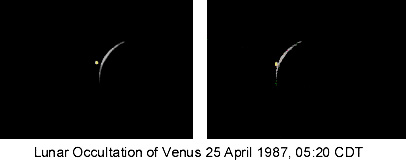
Mercury is so small and close to the sun that imaging more than just a featureless disk is beyond the capability of my equipment. Located 36 million miles from the Sun, Mercury is only 2/5 the size of the Earth. Venus, located 67 million miles from the Sun and almost the same size of the Earth, is completely cloud covered and therefore, seeing surface features with optical equipment is never possible. Both planets exhibit phases as seen from the Earth. Full resolution photos are shown here. |
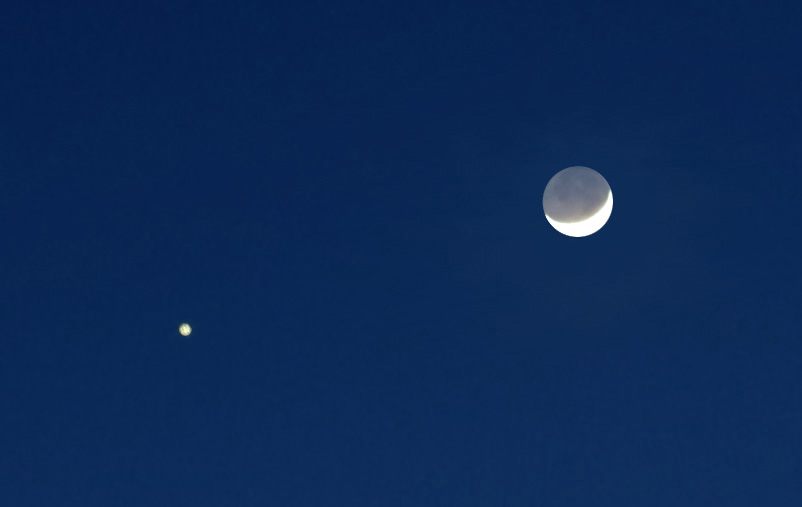
 Mercury 14 July 1991  Venus (gibbous phase) 28 February 2023  Venus (crescent phase) 6 July 2023 |
Seasonal variations on Mars produce changes in its northern and southern polar ice caps. Mars also exhibits shape phases as seen from Earth. Mars has two moons, Phobos and Deimos. The "Red Planet" is located 142 million miles from the Sun, and is about 1/2 the size of the Earth. |
 Mars 1986-88  C/2022 E3 (ZTF) & Mars 10 February 2023 |
 Mars 12 December 2024  Mars 31 December 2024 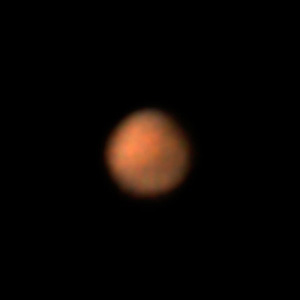 Mars 13 November 2022 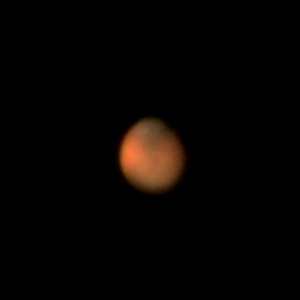 Mars 7 December 2024 |
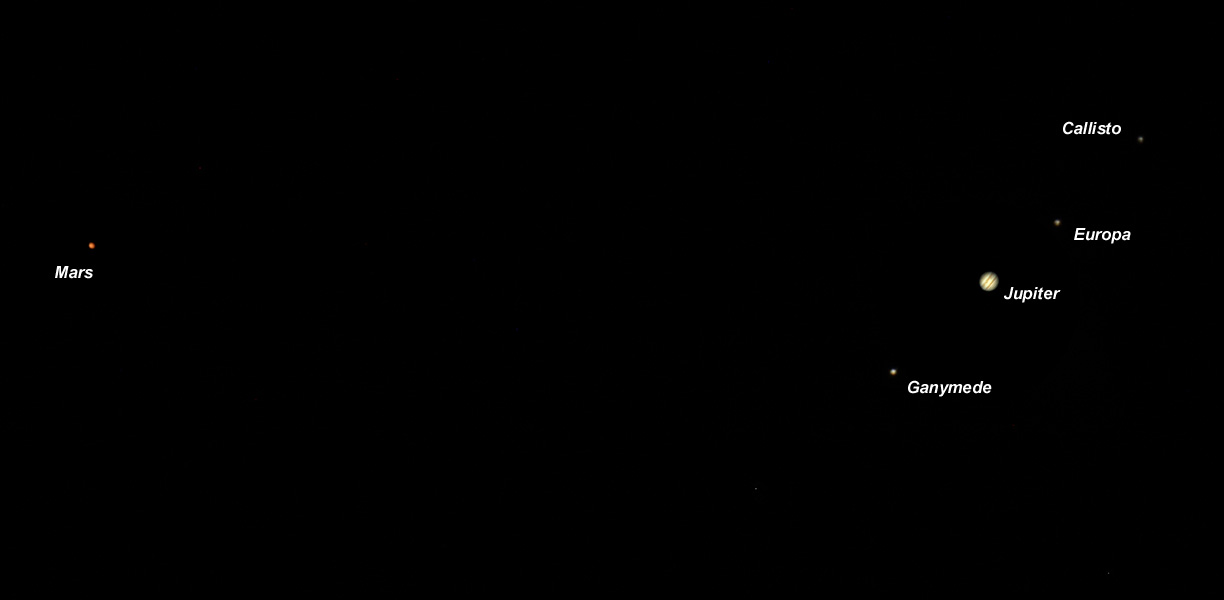
Jupiter's surface is entirely gaseous, and various patterns in the atmosphere can be seen. The most prominent features are two dark bands and the giant red spot which is an enormous storm that has persisted for centuries. In 1989, one of Jupiter's distinctive bands faded away, and was visible again a few years later. |
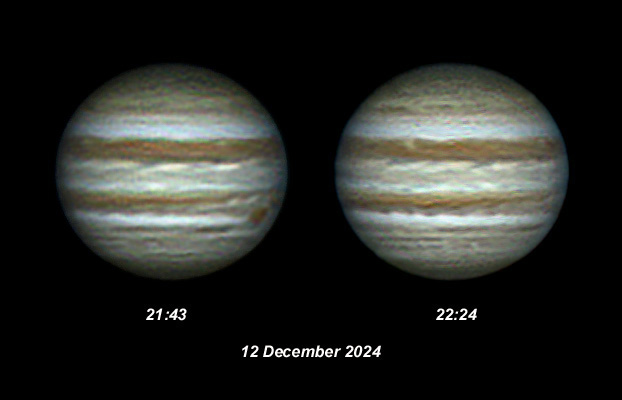 Jupiter 12 December 2024  Jupiter 31 December 2024  Jupiter 28 February 2026 |
 Jupiter 1986-89 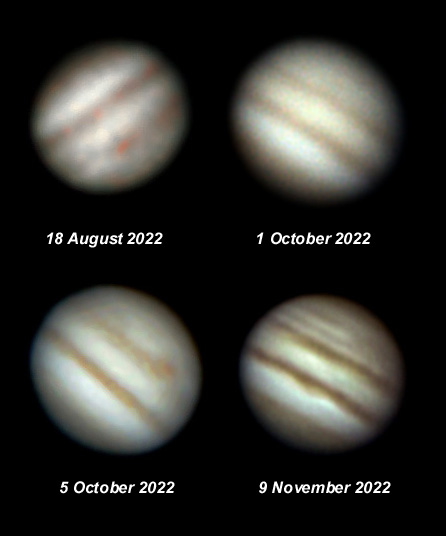 Jupiter 2022  Jupiter 1 September 2023  Jupiter 6 September 2023 |
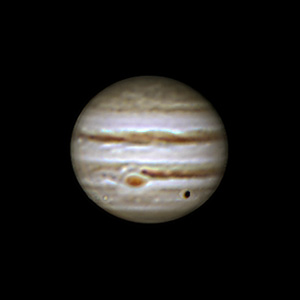 Jupiter 2 October 2023  Jupiter 10 October 2023  Jupiter 23 October 2023  Jupiter 2-3 November 2023 |
 Jupiter 3 November 2023 |
 Jupiter 15 August 2024  Jupiter 29 October 2024  Jupiter 1 December 2024  Jupiter 6 December 2024 |
Jovian Moons
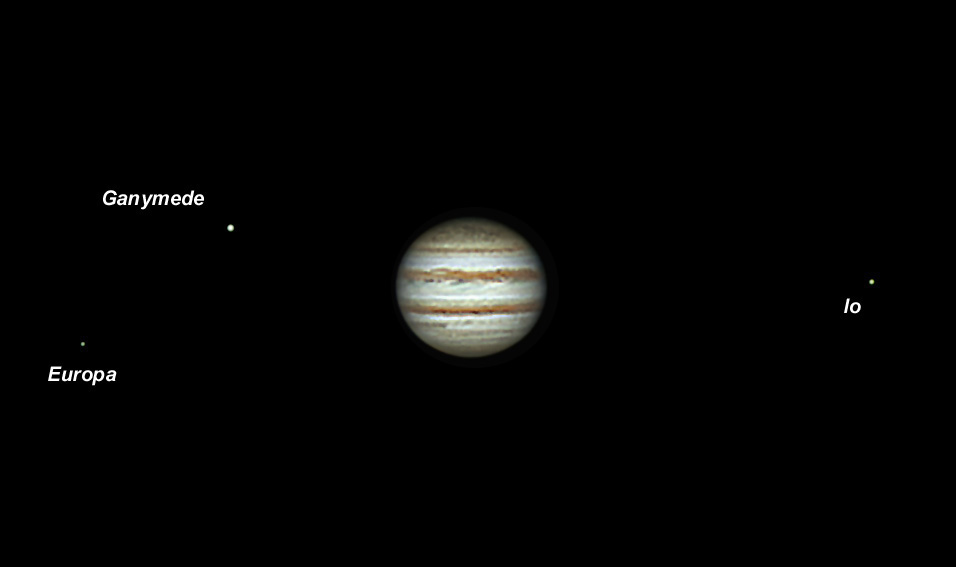


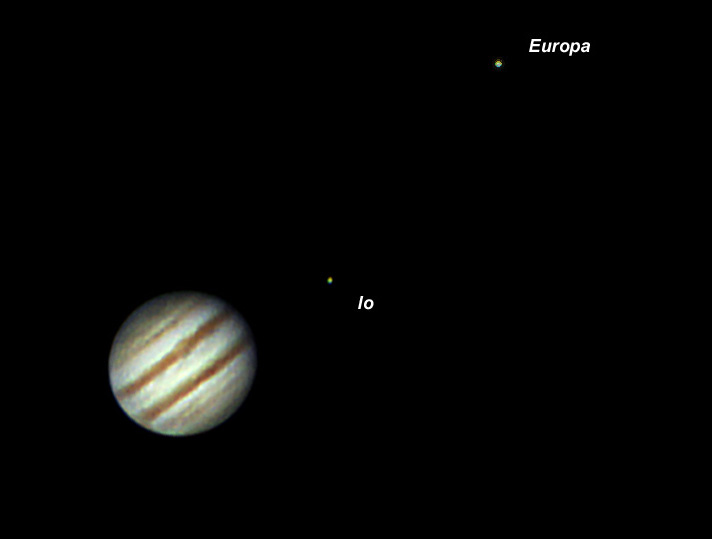


 Callisto transiting Jupiter 28 February 2026  Callisto transiting Jupiter 28 February 2026  Watch a short movie of Callisto and Io 28 February 2026 |
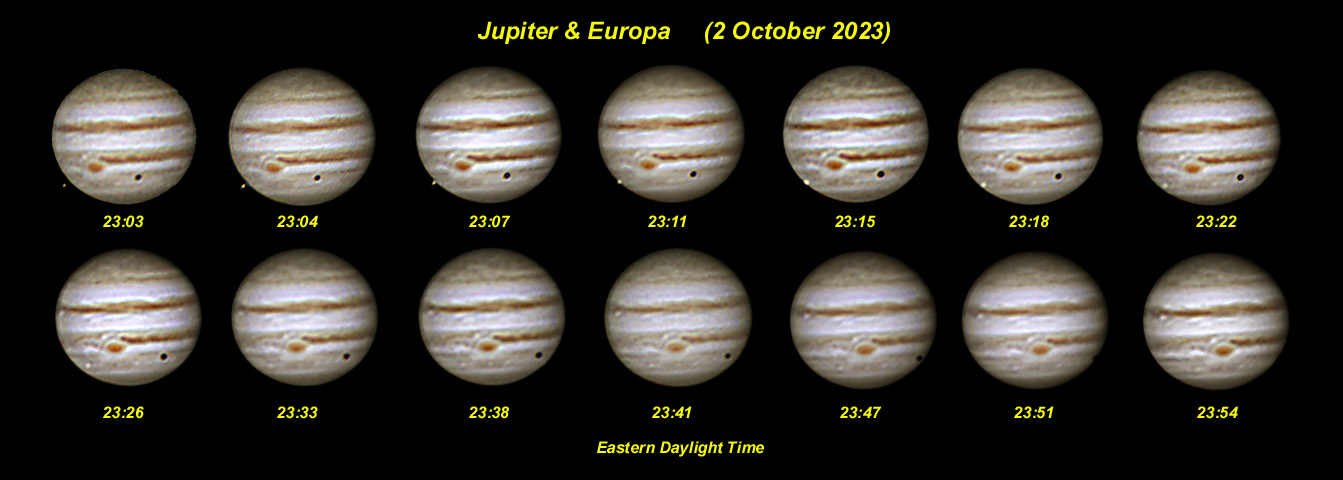 Shadow of Europa on Jupiter 2 October 2023 Watch a short movie of the shadow of Europa moving across Jupiter 2 October 2023 When one of Jupiter's large moons is between the Sun and Jupiter, a shadow of the moon is cast on the surface of the planet.  Shadow of Io on Jupiter 28 August 1986 |
 Shadow of Io on Jupiter 1 December 2024 |
Comet Shoemaker Levy broke apart in July 1992 and large pieces collided with Jupiter in July 1994, causing several large impact scars in the atmosphere that persisted for many months. In my photo taken on 22 July 1994, you can see dark impact scar areas at the top of the planet; two scars are just to the right of center and the other scar is near the left top edge. 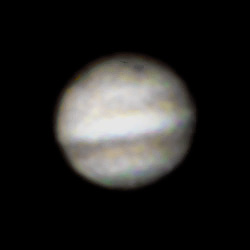 Scars from Comet Shoemaker Levy 22 July 1994 |
Saturn
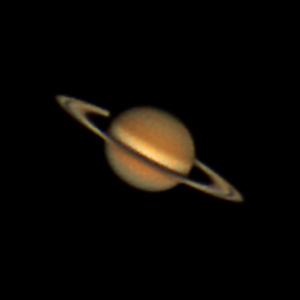
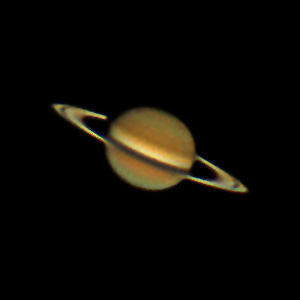
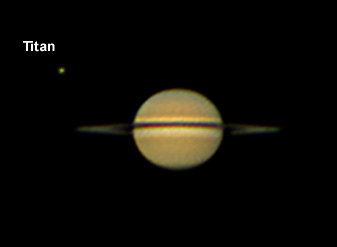
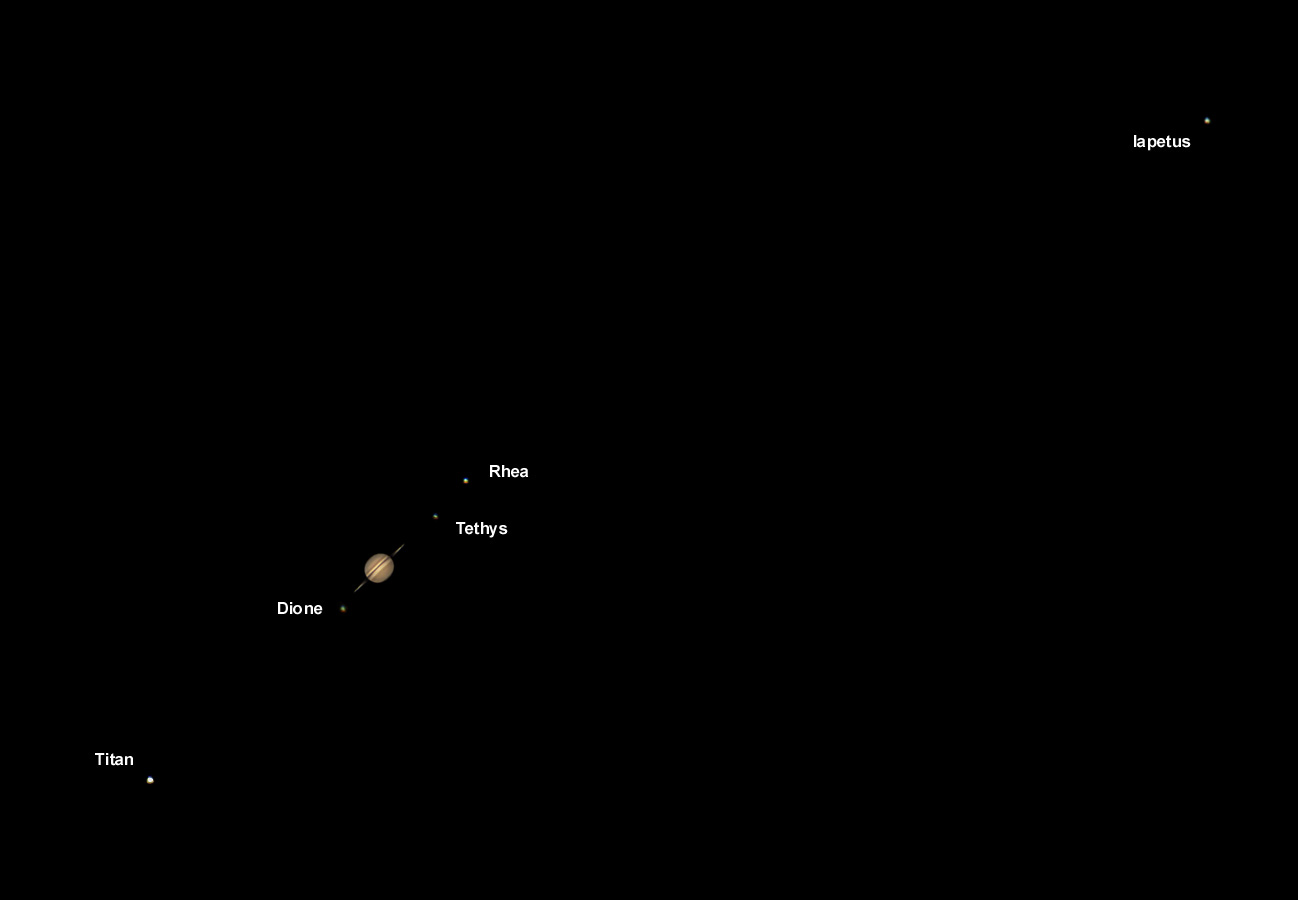
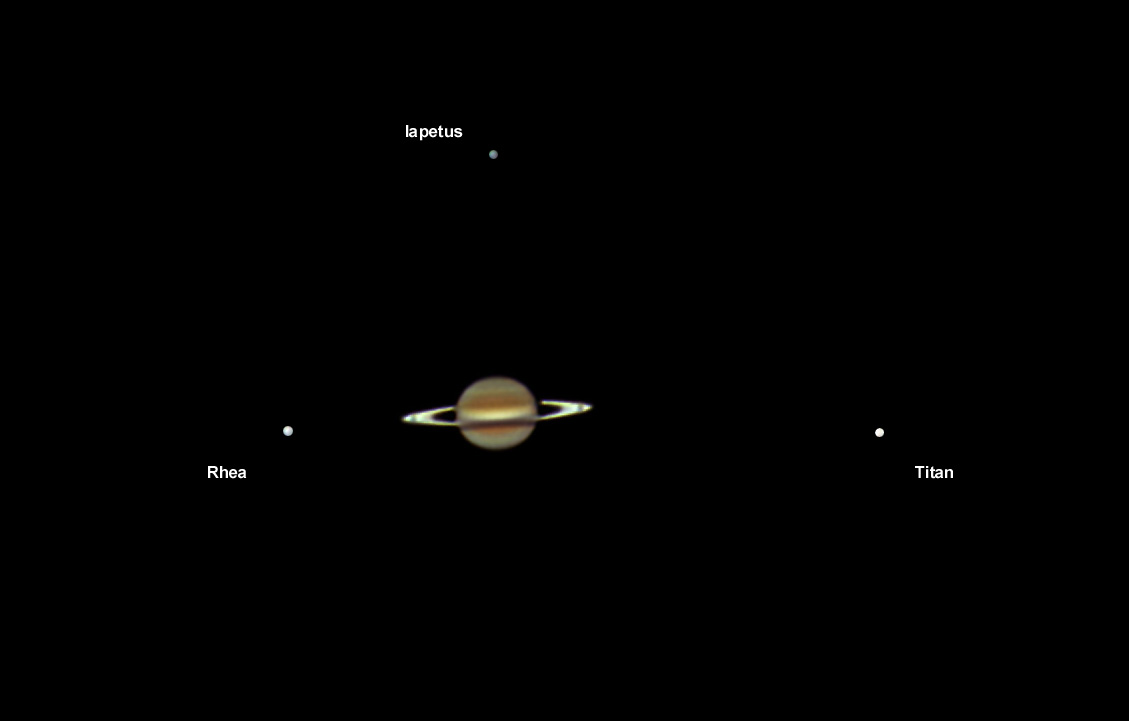
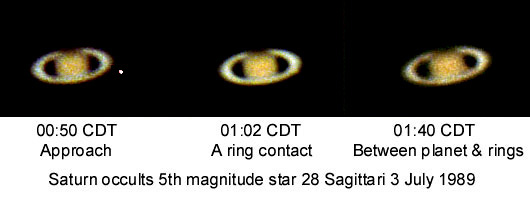
Saturn has at least 83 moons. As seen from Earth, the tilt angle of its rings changes. Every 13 to 15 years, Earth passes through the plane of Saturn's rings, and when seen edge on, they almost disappear. Located 886 million miles from the Sun, this gaseous planet is 9 times the size of the Earth.  Saturn 1986-89 |
 Saturn 2023  Saturn 2024  Saturn 2025  Saturn 2026 |