The Winter Sky
The winter sky is spectacular with its Deep Sky Objects. The Orion Nebula is the best known DSO, and is usually the first DSO photographed because it is so bright and easily visible to the naked eye. While not as bright as the summer Milky Way, the winter Milky Way can be seen on clear nights under dark skies. |
 The winter sky looking south at midnight (image courtesy Stellarium) |
The Orion Region
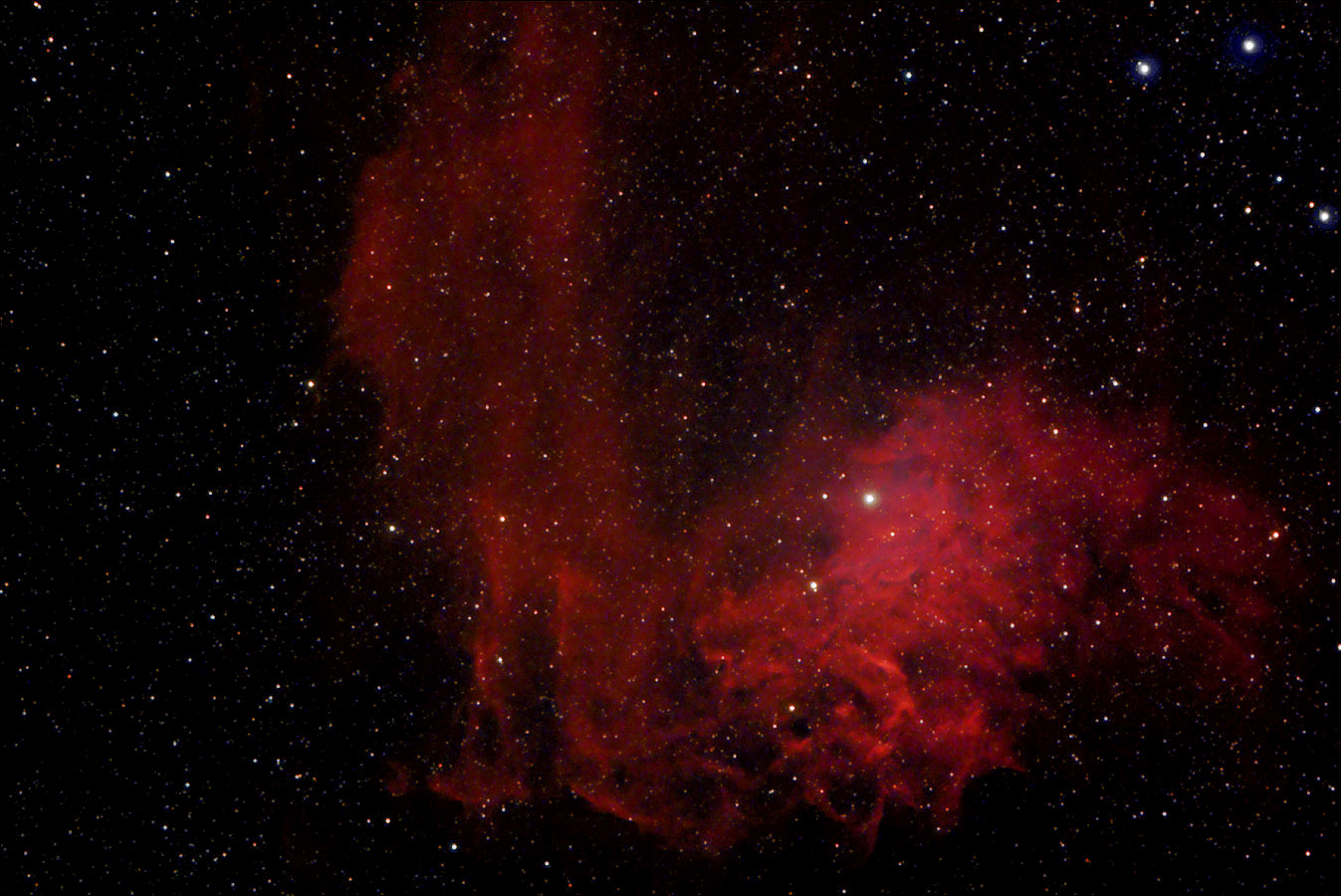
This region of the sky is great for photographing nebulae. The great Orion Nebula (M42) and its companion (M43) form the sword of Orion along with the Running Man Nebula (NGC 1977). Next to the leftmost star of Orion's belt, the Flame Nebula (NGC 2024) and the Horsehead Nebula (B33) are a favorite DSO target for astrophotographers. The Horsehead Nebula is actually a dark nebula that is only seen because it blocks the light of the emission nebula behind it. The large Barnard's Loop (Sh2-276) is to the left of these DSOs, and extends far beyond Betelgeuse. The Witchhead Nebula (reflection nebula NGC 1909) is to the right of Rigel, but its shape is easier to see with the image inverted. Annotations show the locations of my astrophotos. |
 The Orion Region (image courtesy Stellarium) |
Click on thumbnails for larger images.
 Orion Nebula (M42&M43)  Orion (M42&M43) & Running Man (NGC 1977) Nebulae  Flame (NGC 2024) Nebula  Flame (NGC 2024) & Horsehead Nebulae (B33) |
 Horsehead Nebulae (B33) 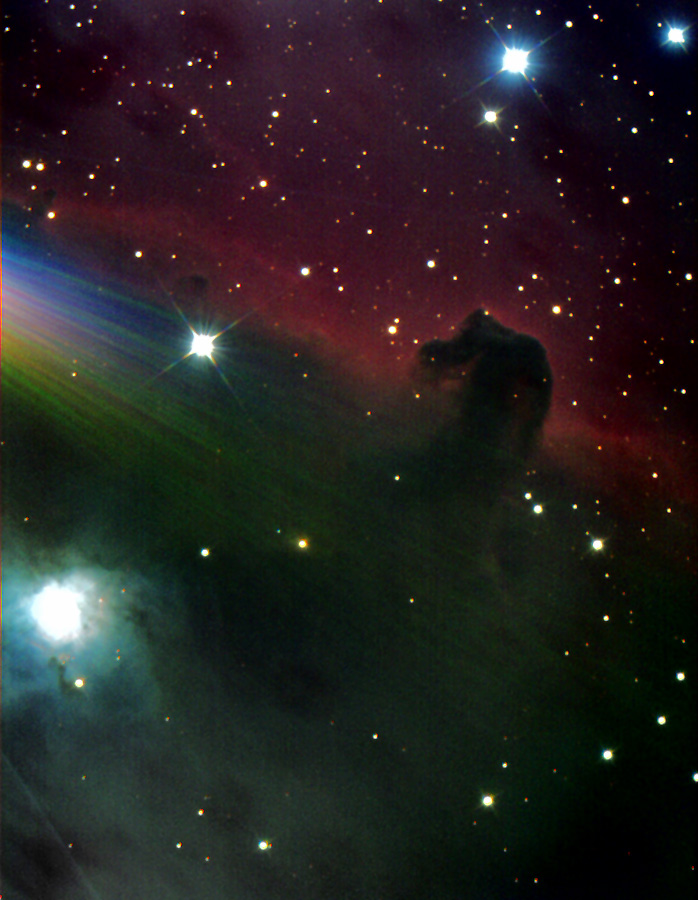 Horsehead Nebulae (B33) |
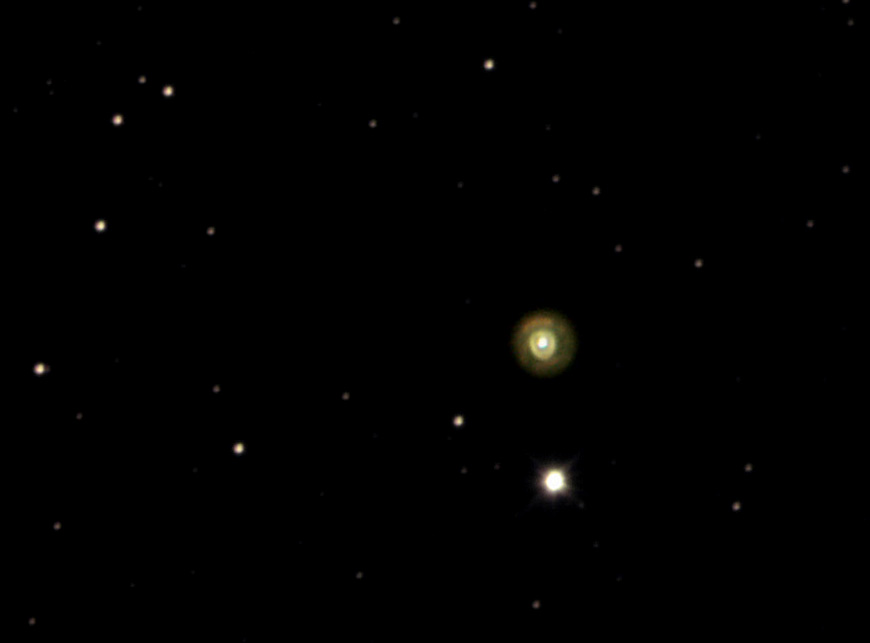
 Barnard's Loop (Sh2-276)  M78, Flame (NGC 2024) & Horsehead (B33) Nebulae  Witch Head Nebula (NGC 1909)  Planetary Nebula (Abell 12) |
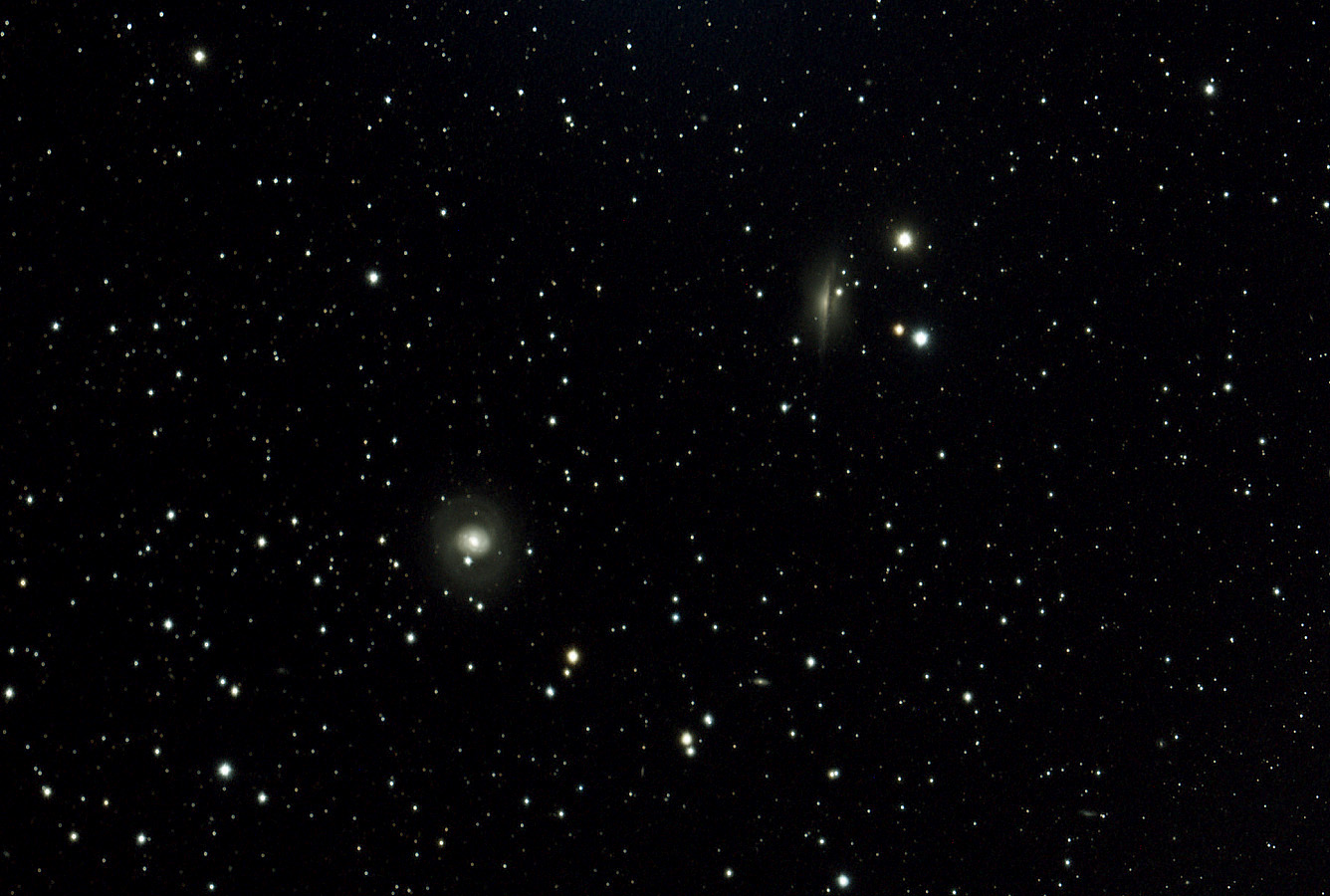
 Molecular Cloud (IC426)  Interacting Galaxies (ARP 327) |
The Rosette Region
The plane of the winter Milky Way is located just to the east of Orion, and is filled with nebulae and star clusters. The most spectacular nebula in this area is the Rosette Nebula with its central open star cluster NGC 2244. Nearby, the Cone Nebula with its central Christmas Tree open star cluster have a combined designation of NGC 2264. The Jellyfish (IC 443) and Monkey Head (NGC 2174) nebulae are to the north. The appearance of Hubble's Variable Nebula (NGC 2261) changes over time. Dense condensations of dust near the star cast shadows out into the nebula, and as they move the illumination changes, giving rise to the variations over weeks and months. |
 The Rosette Region (image courtesy Stellarium) |
Click on thumbnails for larger images.


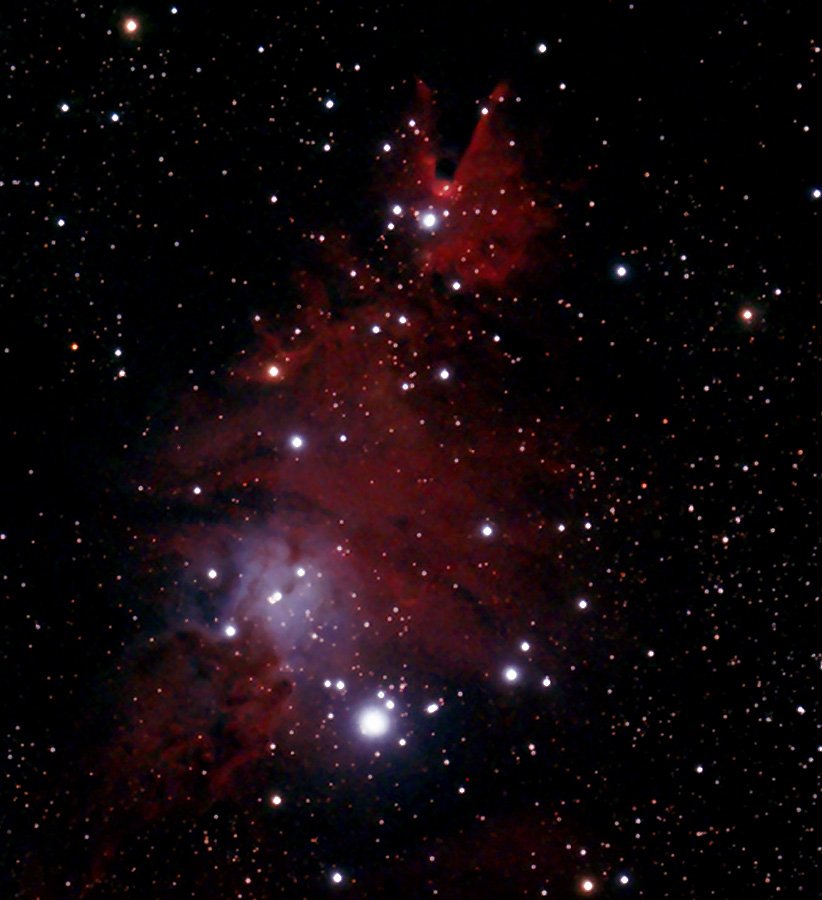

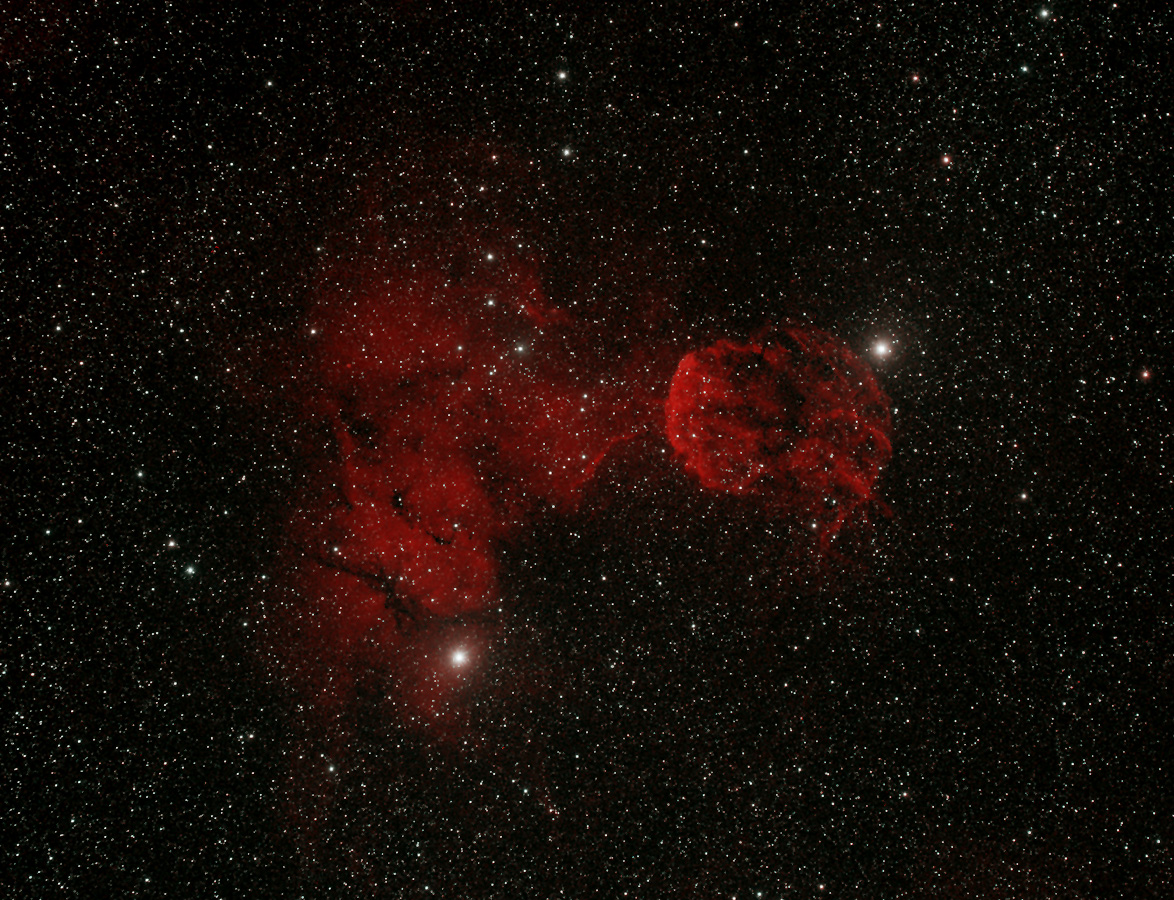
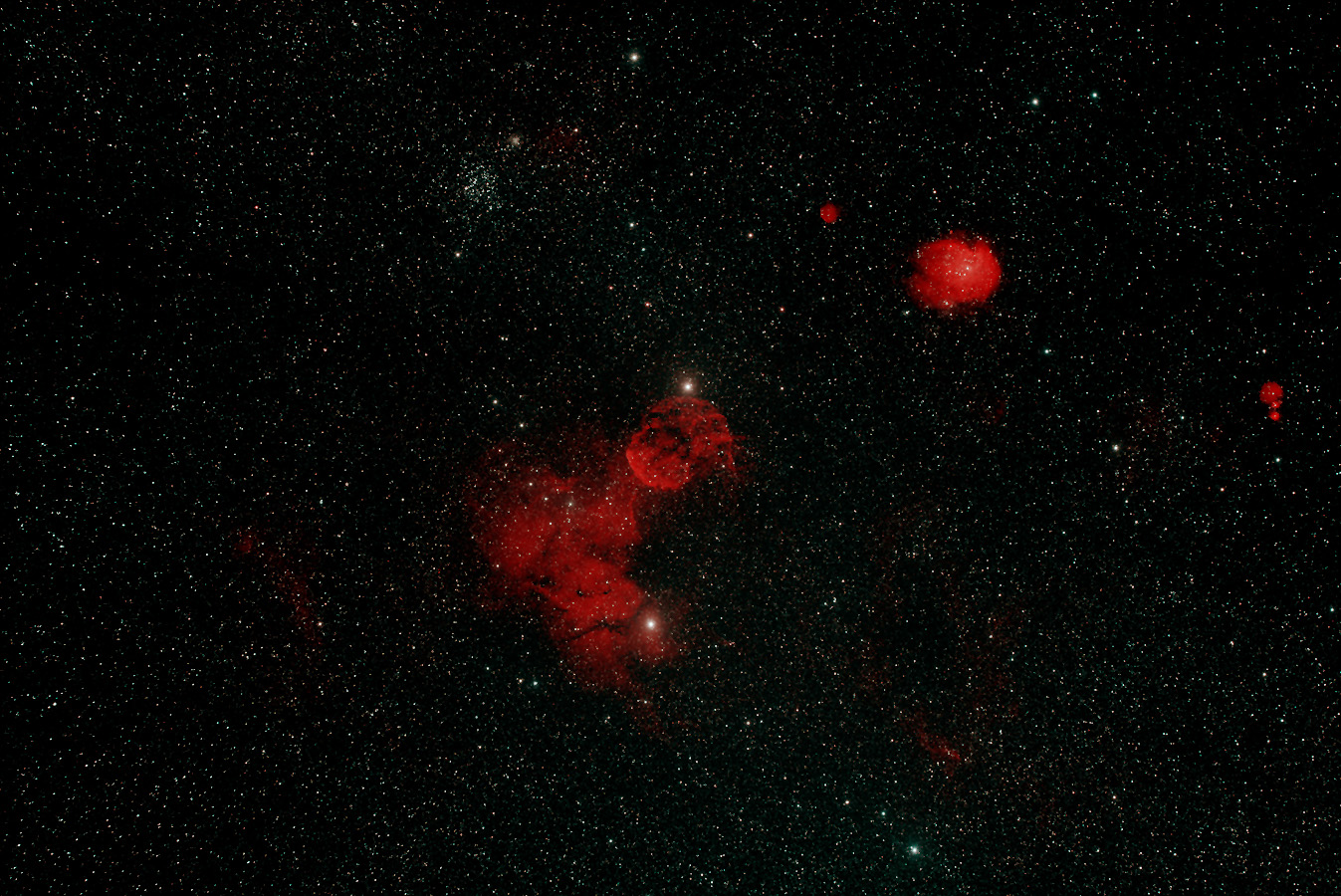

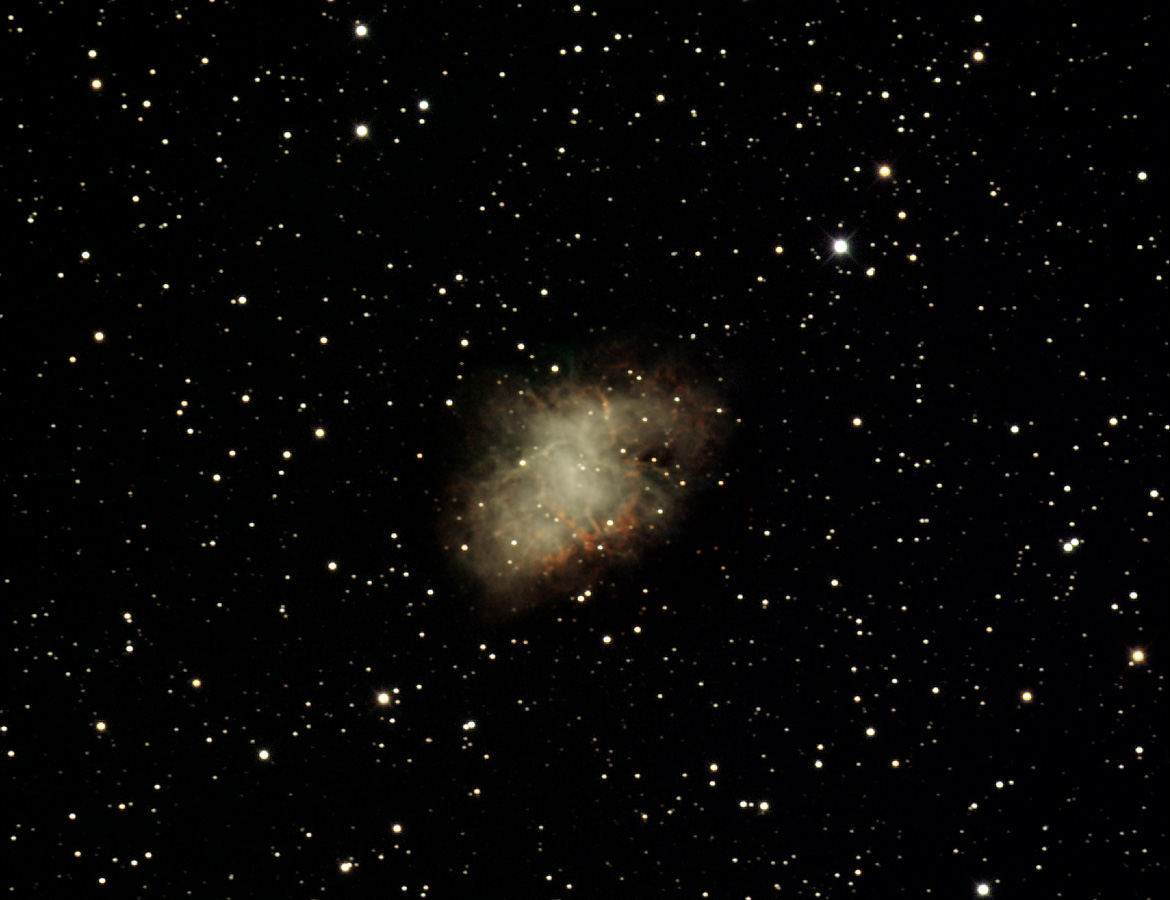 Crab Nebula (M1)  Hubble's Variable Nebula (NGC 2261) 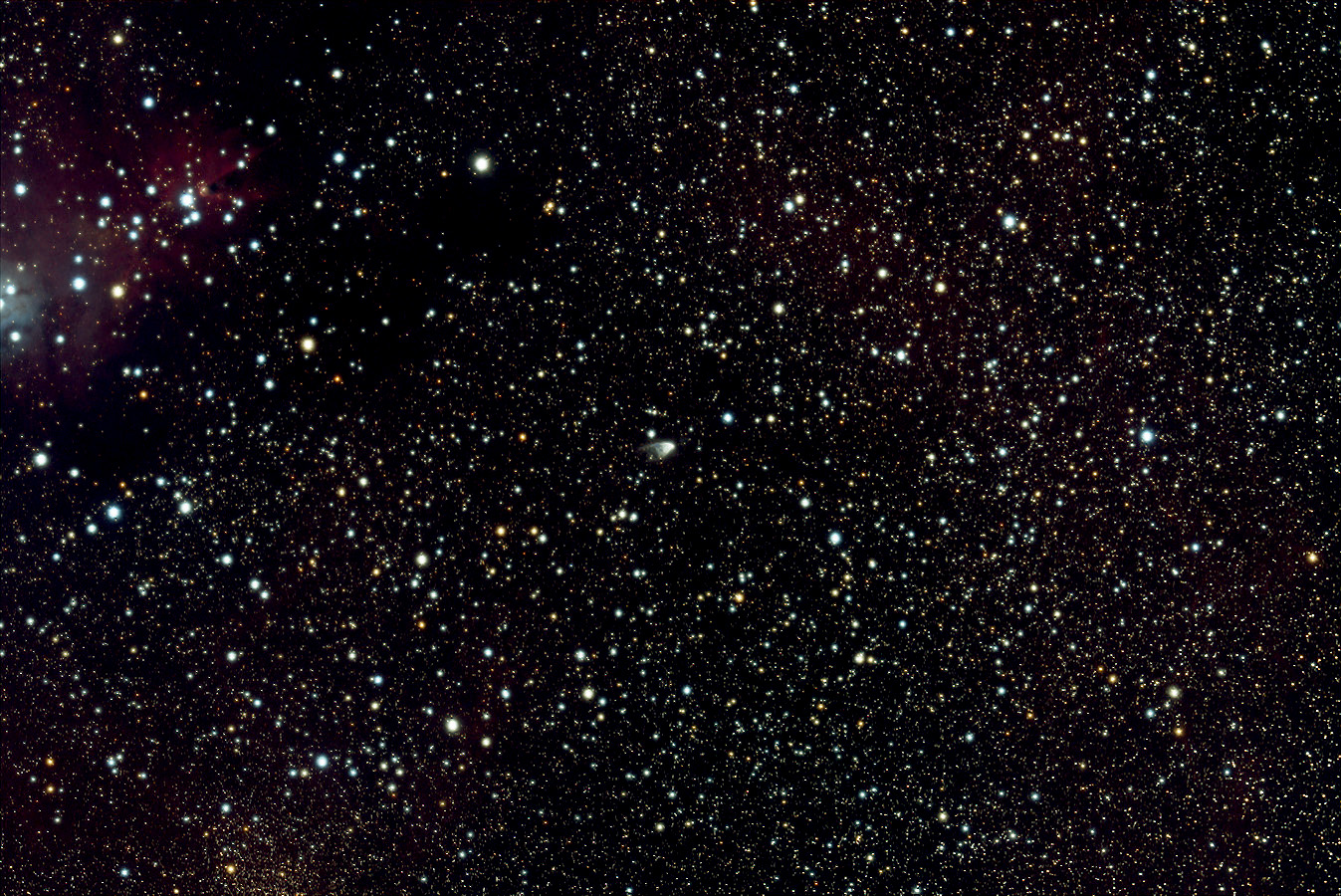 Hubble's Variable Nebula (NGC 2261) |
The Zenith Region
Near the zenith, the Pleaides open star cluster (M45), also known as "The Seven Sisters" shines brightly as a naked eye DSO. Nearby gas clouds reflect star light as blue reflection nebulosity. |
 The Zenith Region (image courtesy Stellarium) |
Click on thumbnails for larger images.
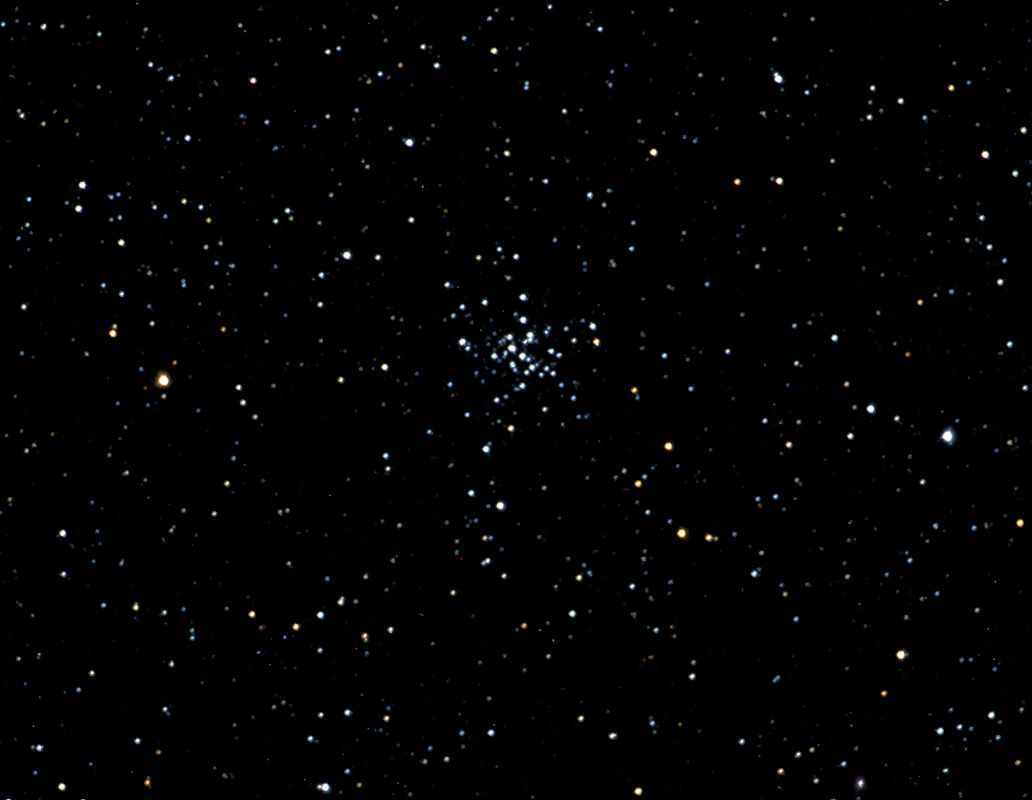
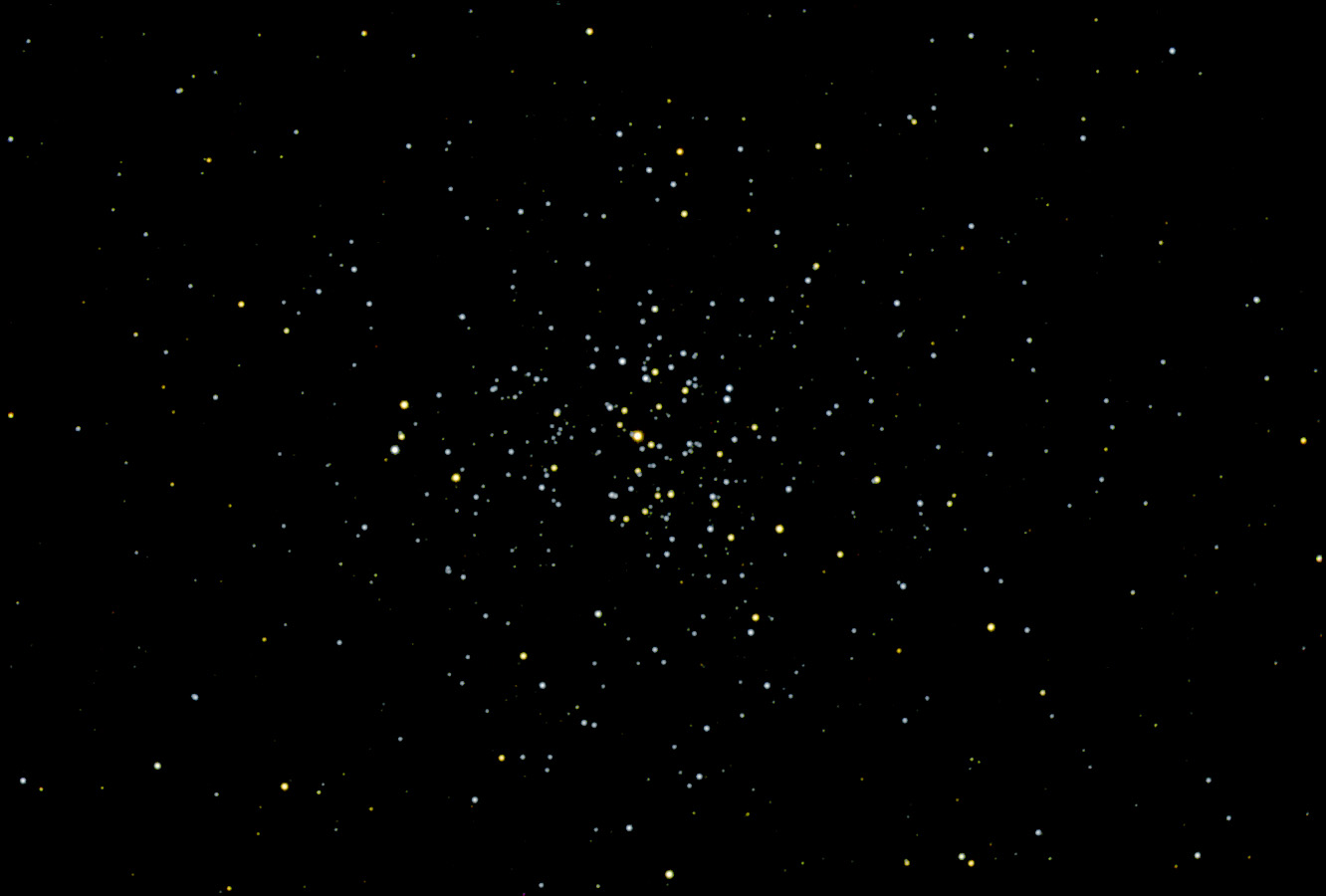
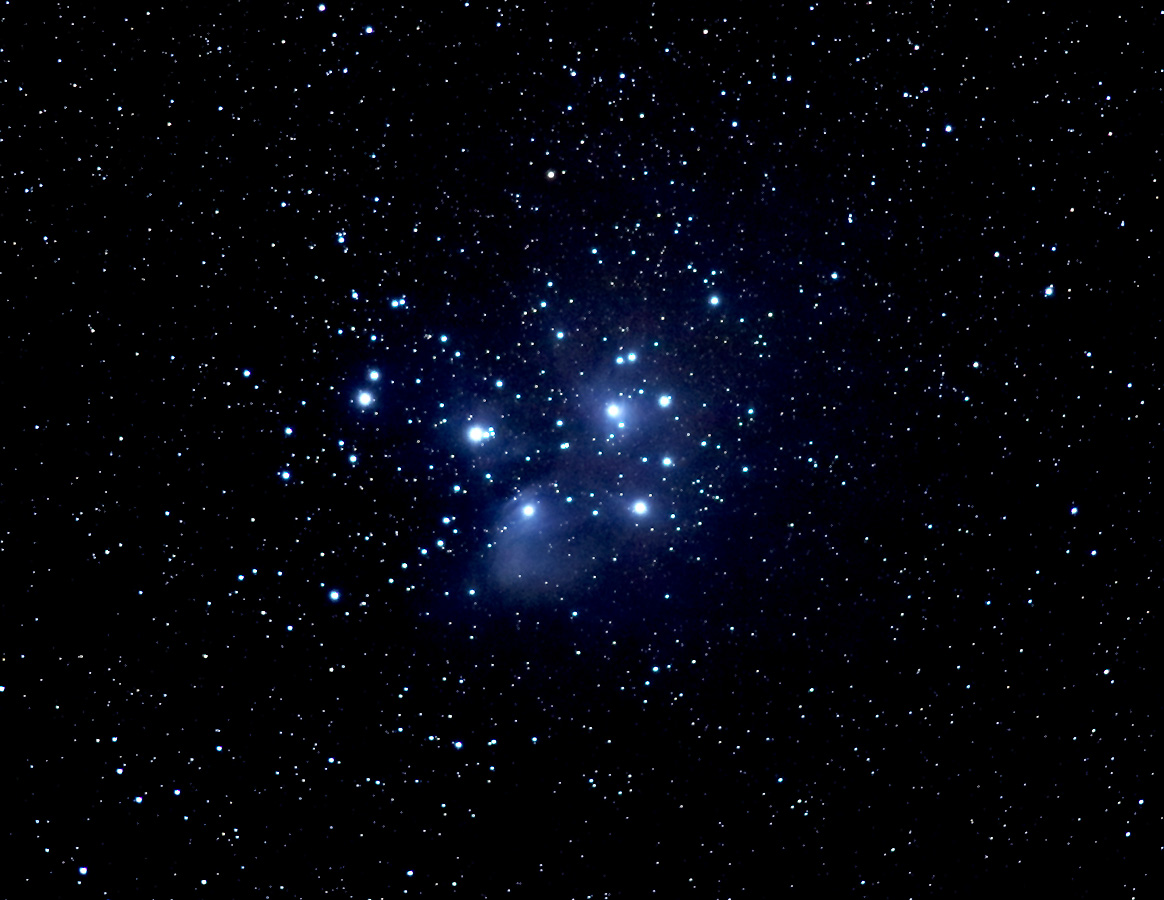 M45 Pleiades Open Cluster 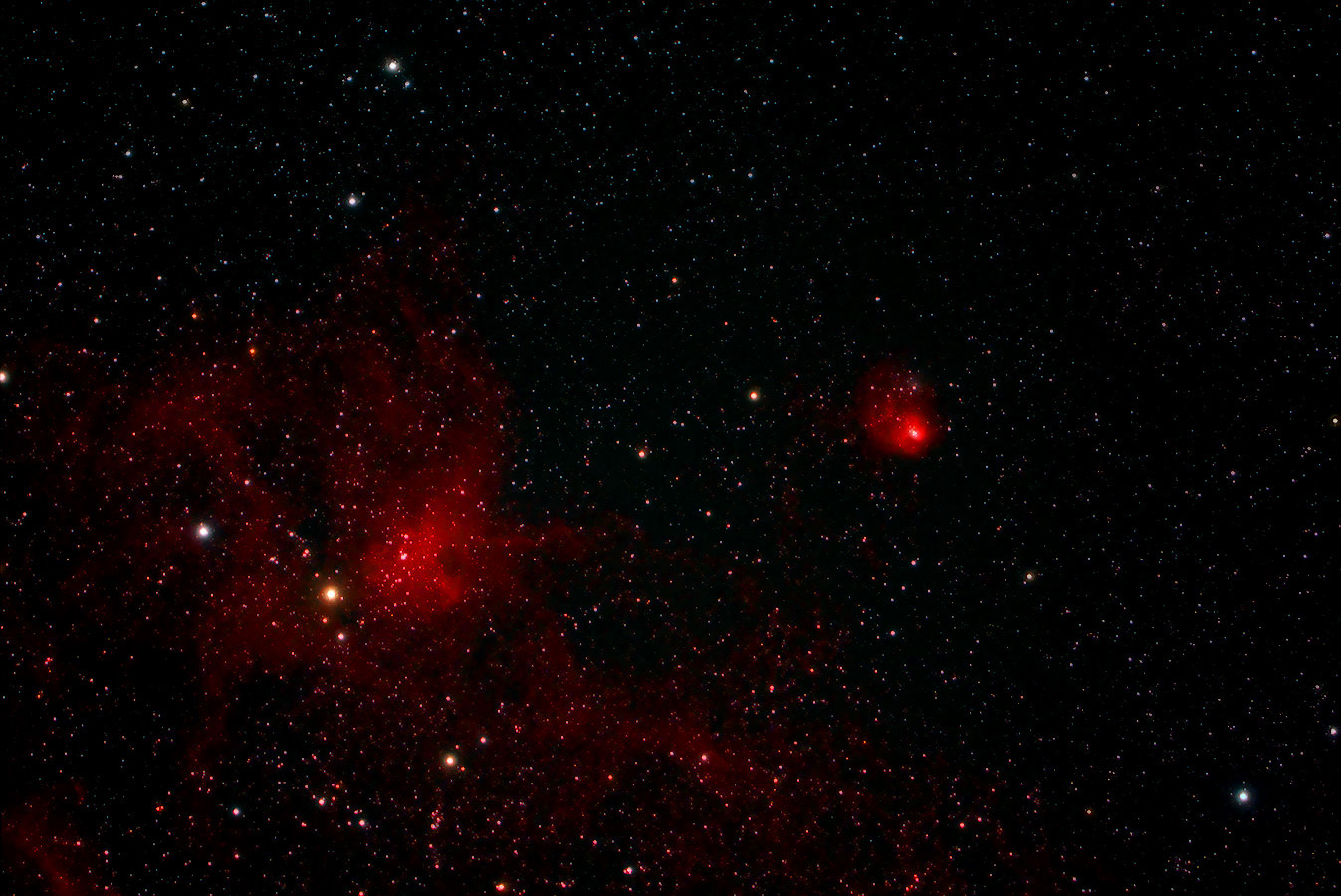 Spider & Fly Nebulae (IC417 & NGC1931) Nebulae |


More Winter DSOs looking South
 More Winter DSOs looking South (image courtesy Stellarium) |
Click on thumbnails for larger images.
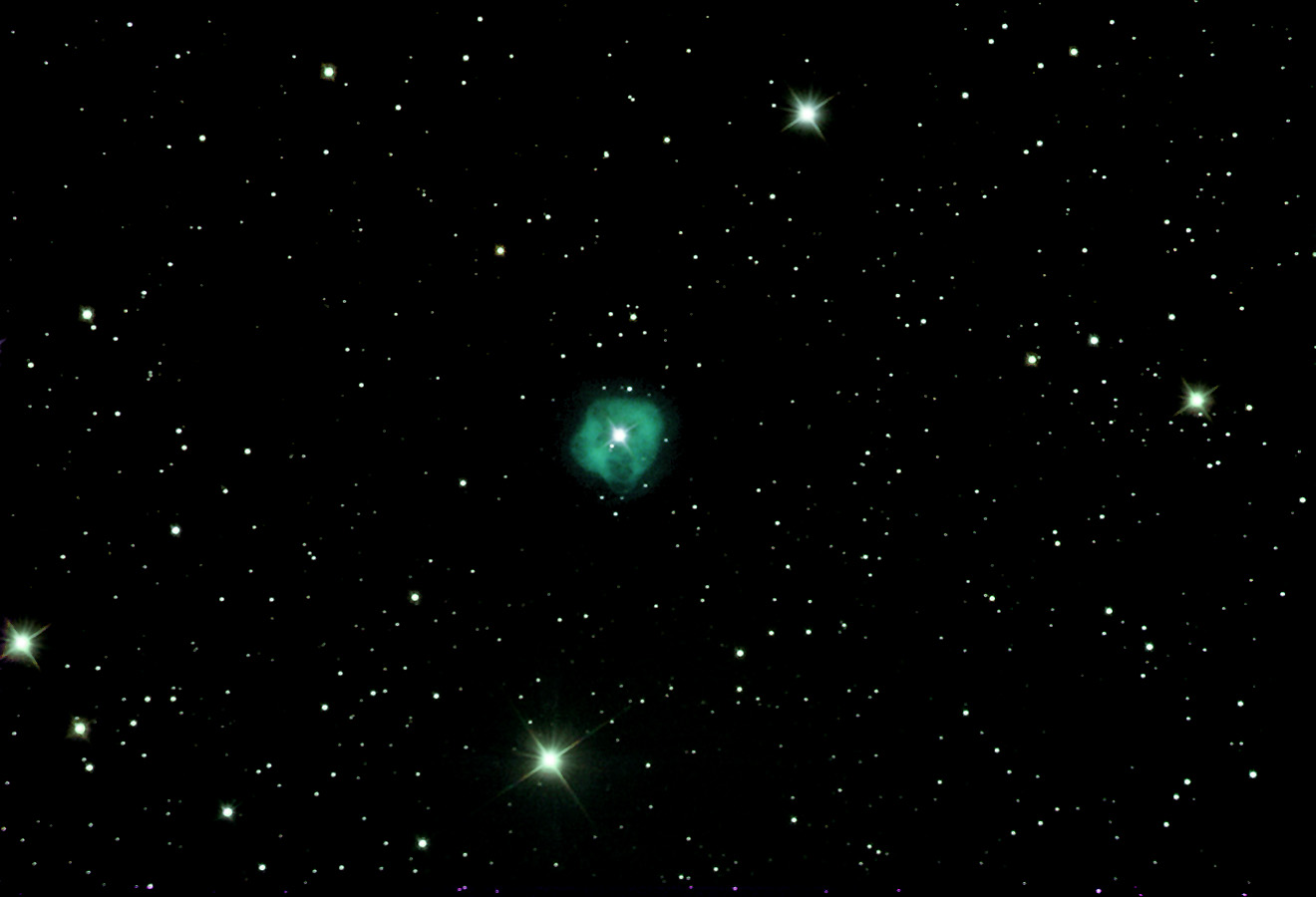
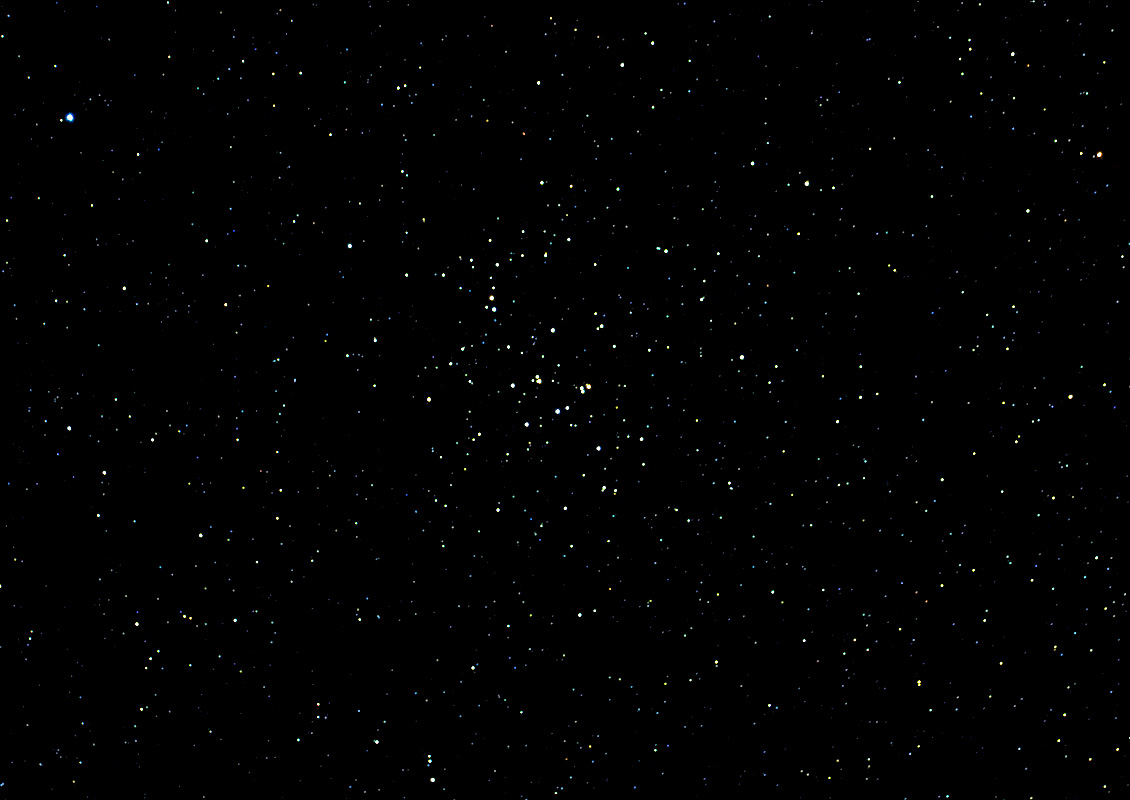
 Thor's Helmet (NGC 2359)  Thor's Helmet (NGC 2359) & NGC2360 Open Cluster  Medusa Planetary Nebula (Sh2-274) & NGC 2395 Open Cluster |





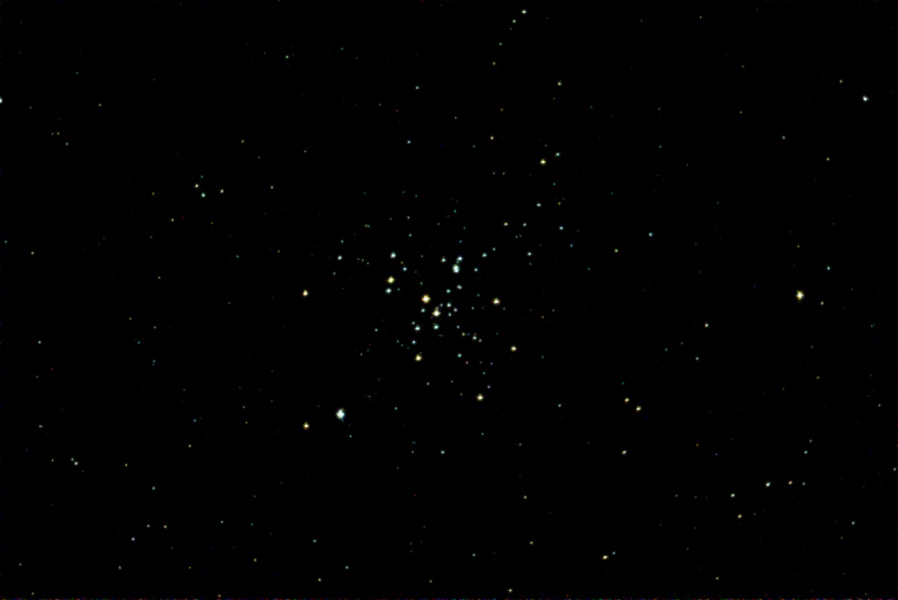
The View to the North
The view to the north also shows the plane of our Milky Way Galaxy, and DSOs near the celestial pole (Polaris) come into view. At my latitude for astrophotography, Polaris is located 38 degrees above the horizon. All of the DSOs within a circle of 38 degrees from Polaris will be visible all year long, but many of them will be too close to the horizon to be easily seen through the dense atmosphere.  38 degree circle around Polaris (background image courtesy Stellarium) |
 The winter sky looking north at midnight (image courtesy Stellarium) |
The Milky Way Region
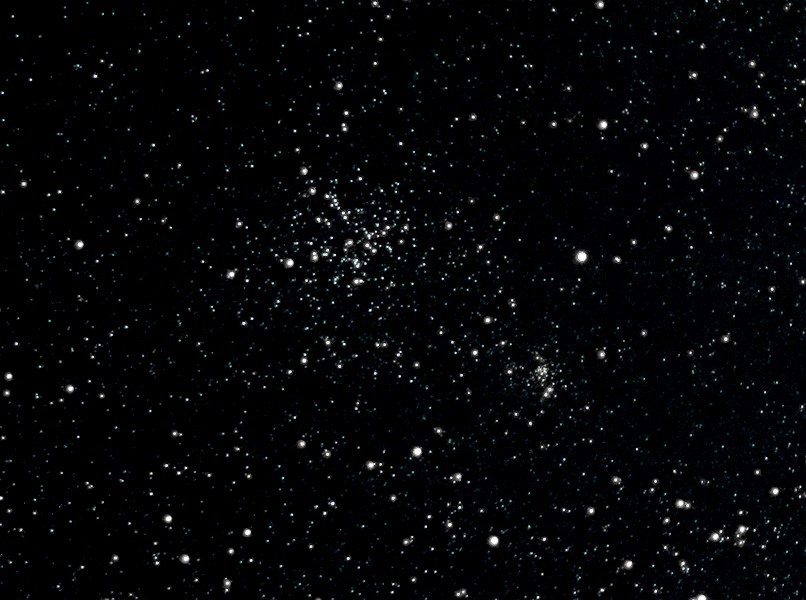
The California Nebula (NGC 1499), named for its shape, is now high in sky. The Elephant Trunk Nebula (IC 1396), Heart and Soul Nebulae (IC 1805 and IC 1848), with nearby double open star cluster h & chi Persei (NGC 869 & NGC 884) are now closer to the horizon. Annotations show the locations of my astrophotos. |
 The winter sky looking north at midnight (background image courtesy Stellarium) |
Click on thumbnails for larger images.


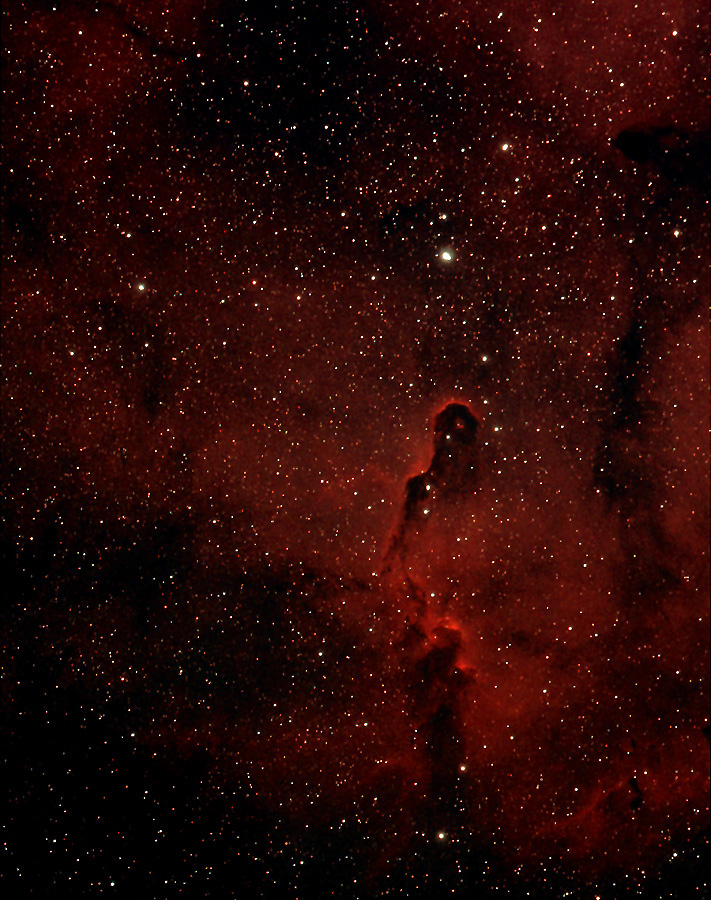


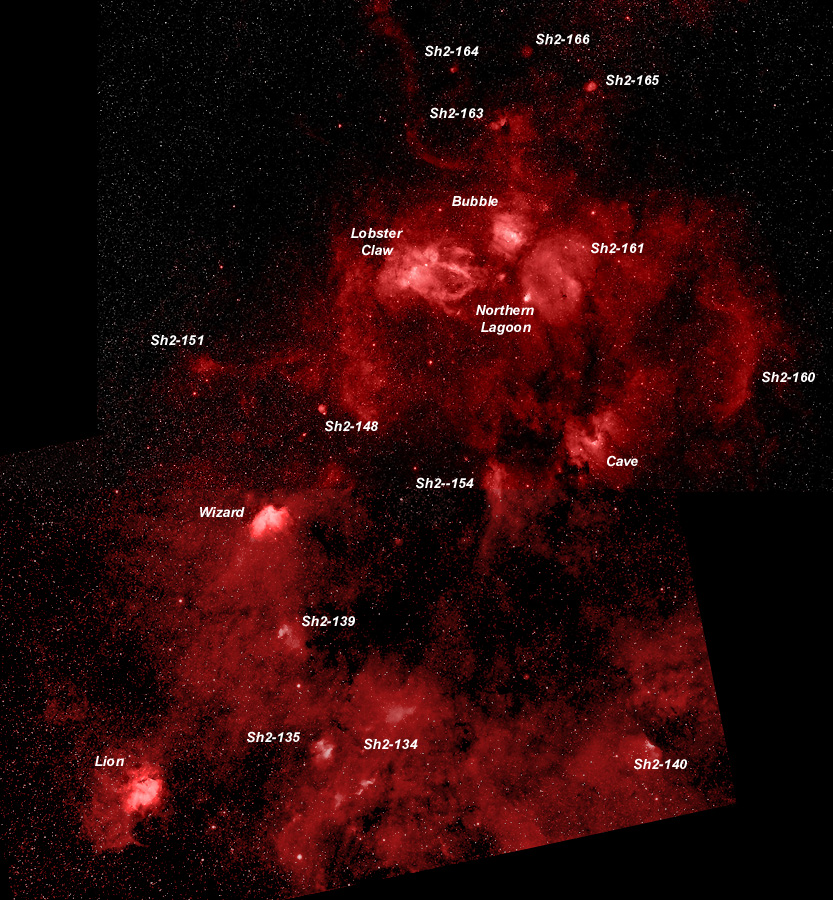
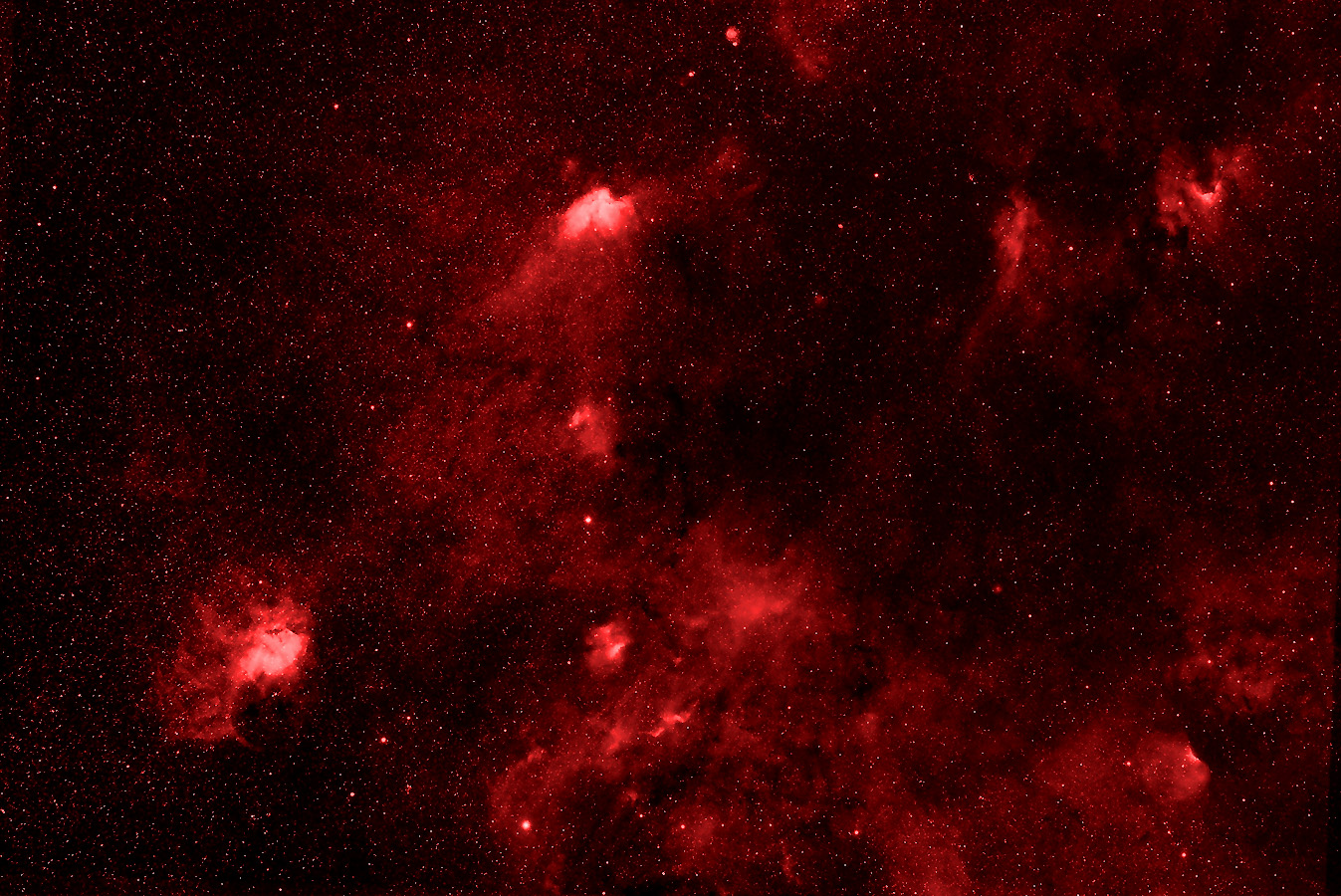


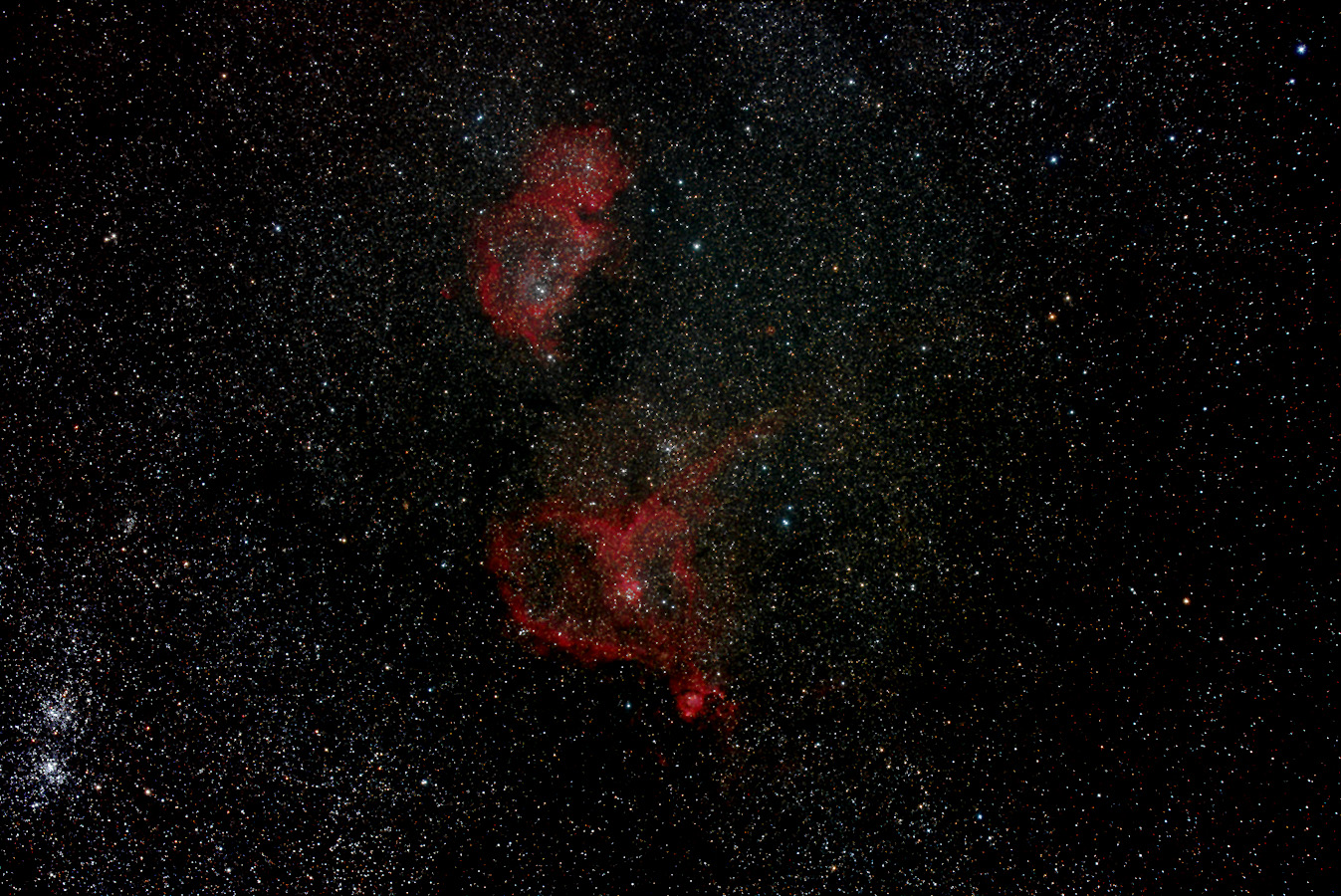
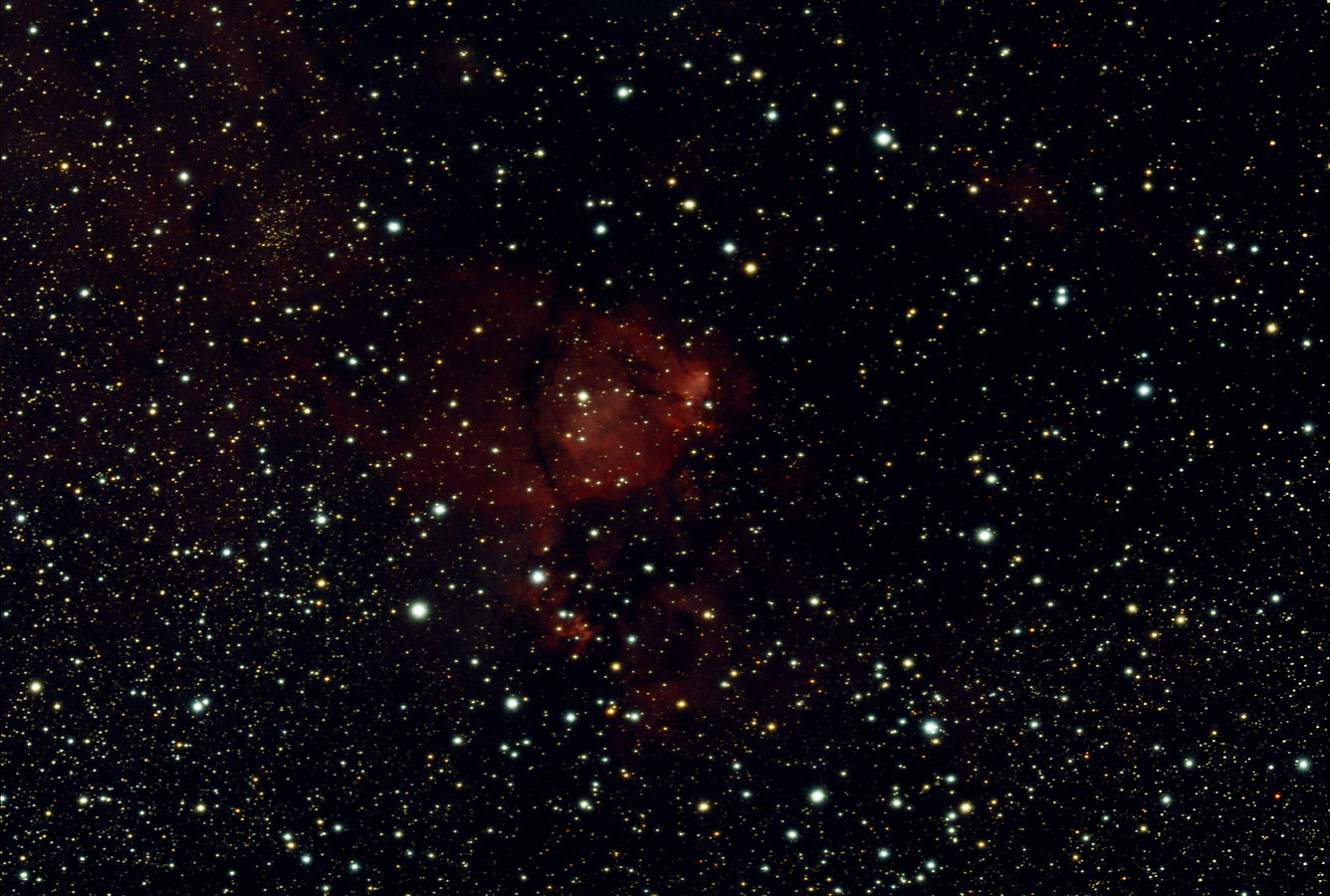


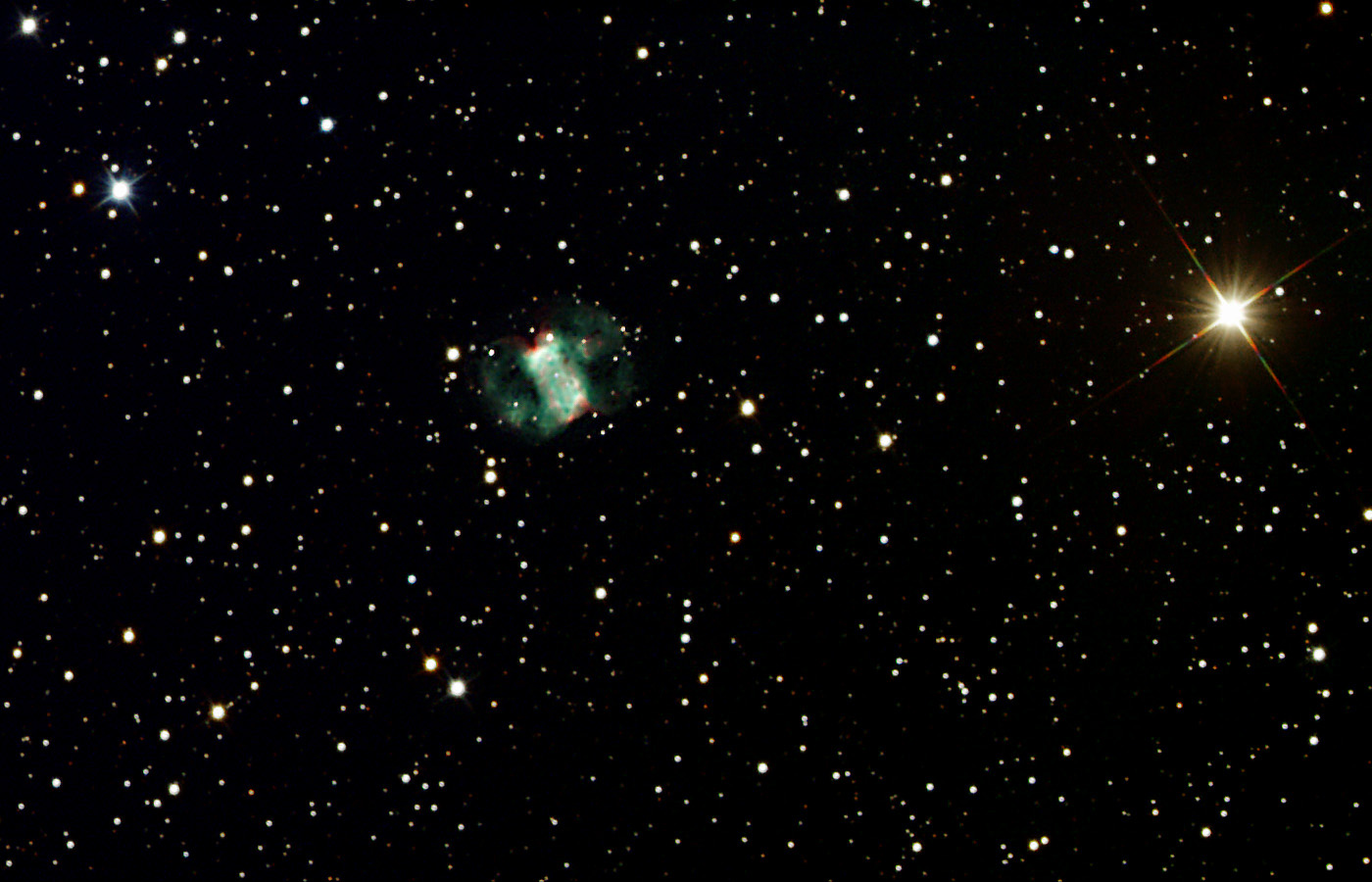


 Pacman Nebula (NGC 281)  Cocoon Nebula (C19) NGC 7209 & 7243  Cocoon Nebula (C19) |
Galaxies
The region around Polaris is rich with galaxies. Andromeda Galaxy (M31), and its companion galaxies M32 and M110, are in good position for viewing and photography. The Triangulum Galaxy (M33) is also well positioned for viewing and astrophotography. |
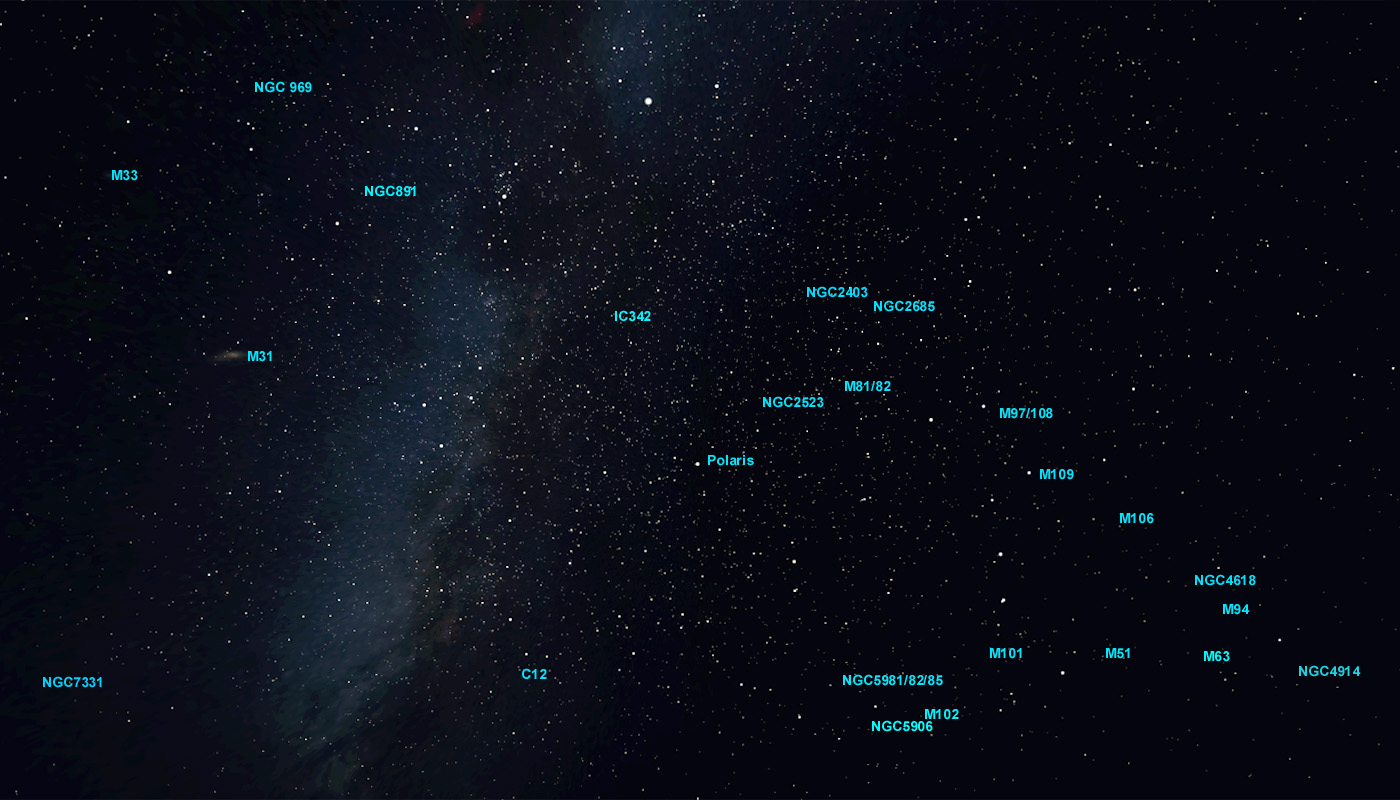 The winter sky looking north at midnight (background image courtesy Stellarium) |
Click on thumbnails for larger images.
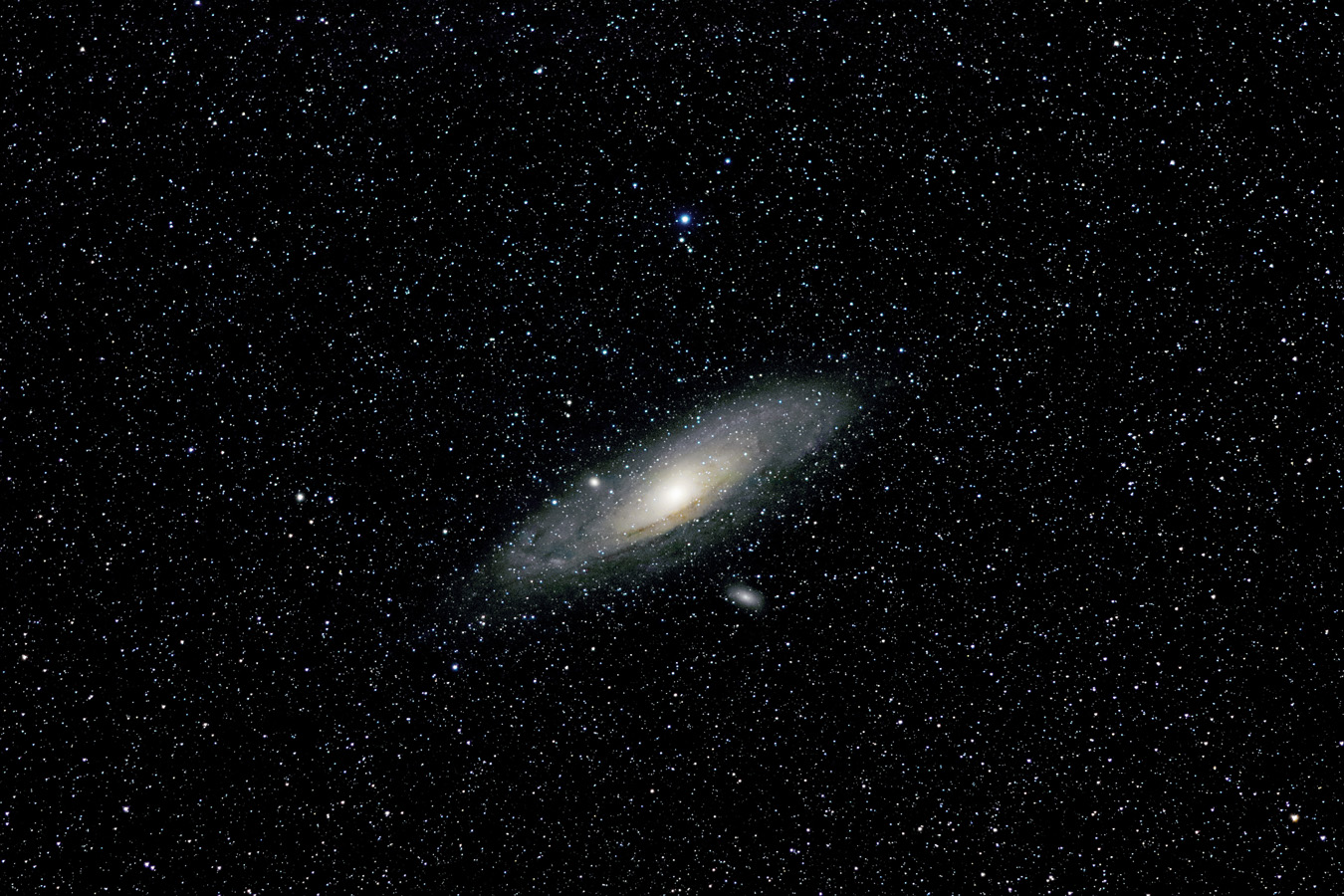 Andromeda (M31) & M110, M32 Galaxies  Andromeda (M31) & M110, M32 Galaxies 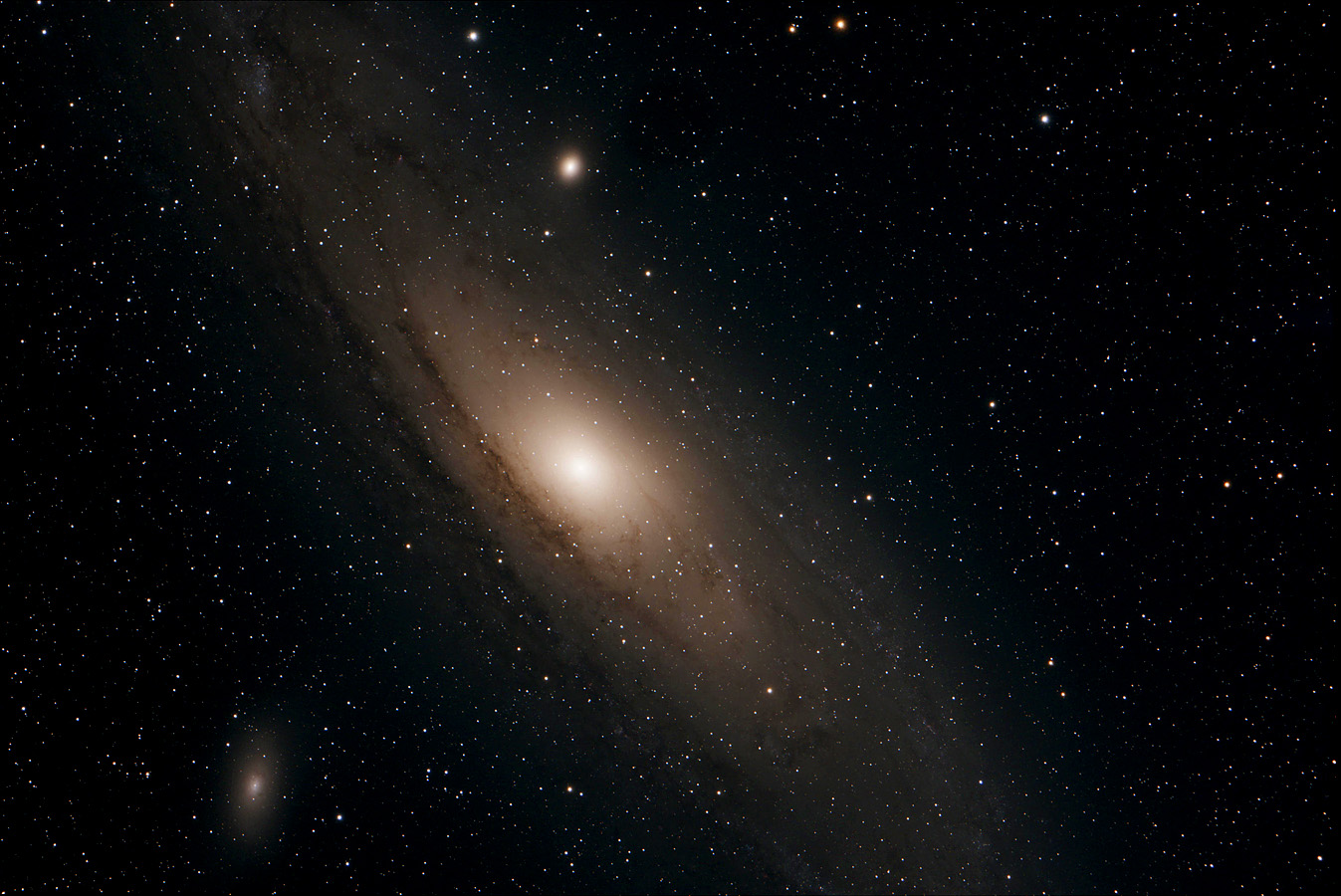 Andromeda (M31) & M110, M32 Galaxies |


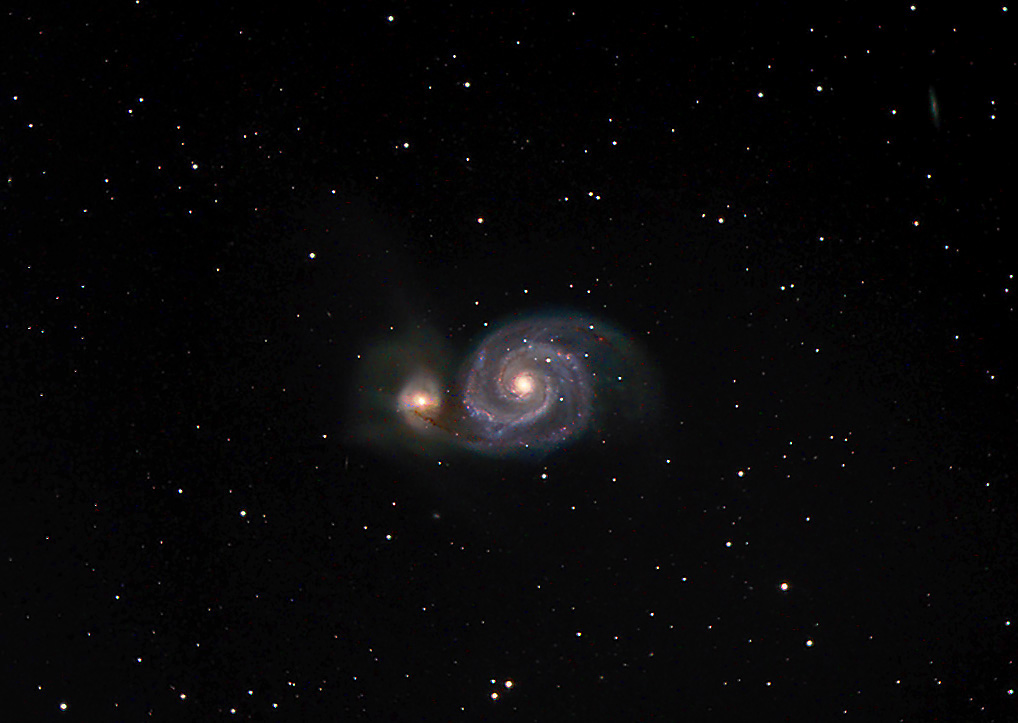


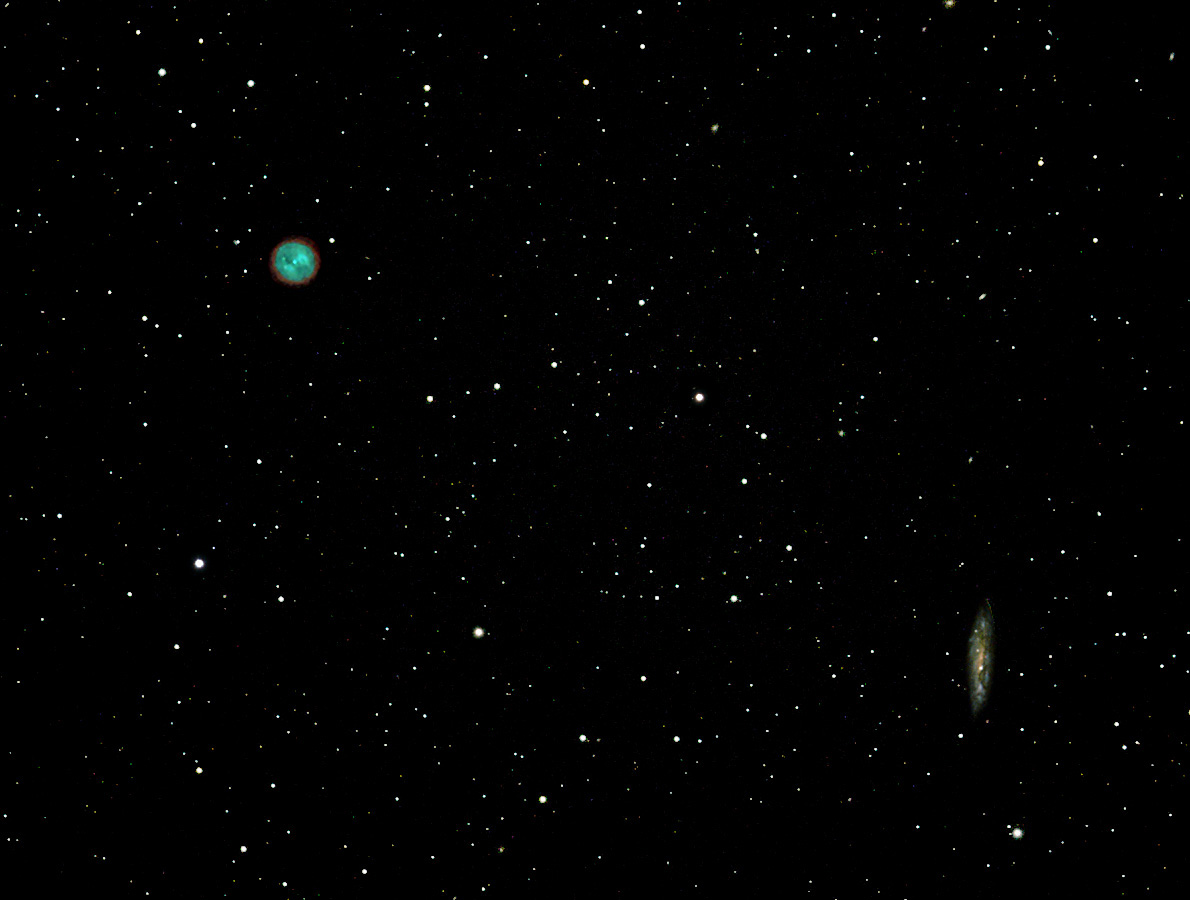





Pinwheel Galaxy (M101) and Supernova SN 2023ixf
 Pinwheel Galaxy (M101)  Pinwheel (M101) Galaxies annotated | |
Supernovae are powerful explosions of stars when their internal nuclear fuel supplies burn out and the stars quickly collapse, resulting in massive shock waves causing stars to explode. Supernova 2023ixf was first observed on 19 May 2023 in the Pinwheel Galaxy (M101), and by 22 May 2023, SN 2023ixf had brightened to about magnitude 11.The supernova started to fade around 10 June 2023. SN 2023ixf is not visible in the 6 April 2024 image. | |
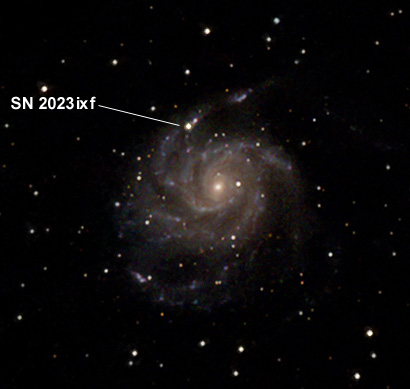 Supernova SN 2023ixf; 3 July 2023 Pinwheel Galaxy (M101) ; 20 May 2025  Supernova SN 2023ixf Pinwheel Galaxy (M101) 19 April 2022-3 July 2023-6 April 2024 |
NGC 7331 Galaxy; Supernovae SN2025rbs and SN2026aaiv
The Gravitational-wave Optical Transient Observer (GOTO), an array of robotic optical telescopes, discovered a supernova (SN 2025rbs) in the NGC 7331 galaxy located in the constellation of Pegasus on July 14, 2025. |
 NGC7331 Galaxy & Stephan's Quintet  NGC7331 Galaxy & SN 2025rbs  Stephan's Quintet |
NGC 4914 Galaxy and Supernova SN 2026JC
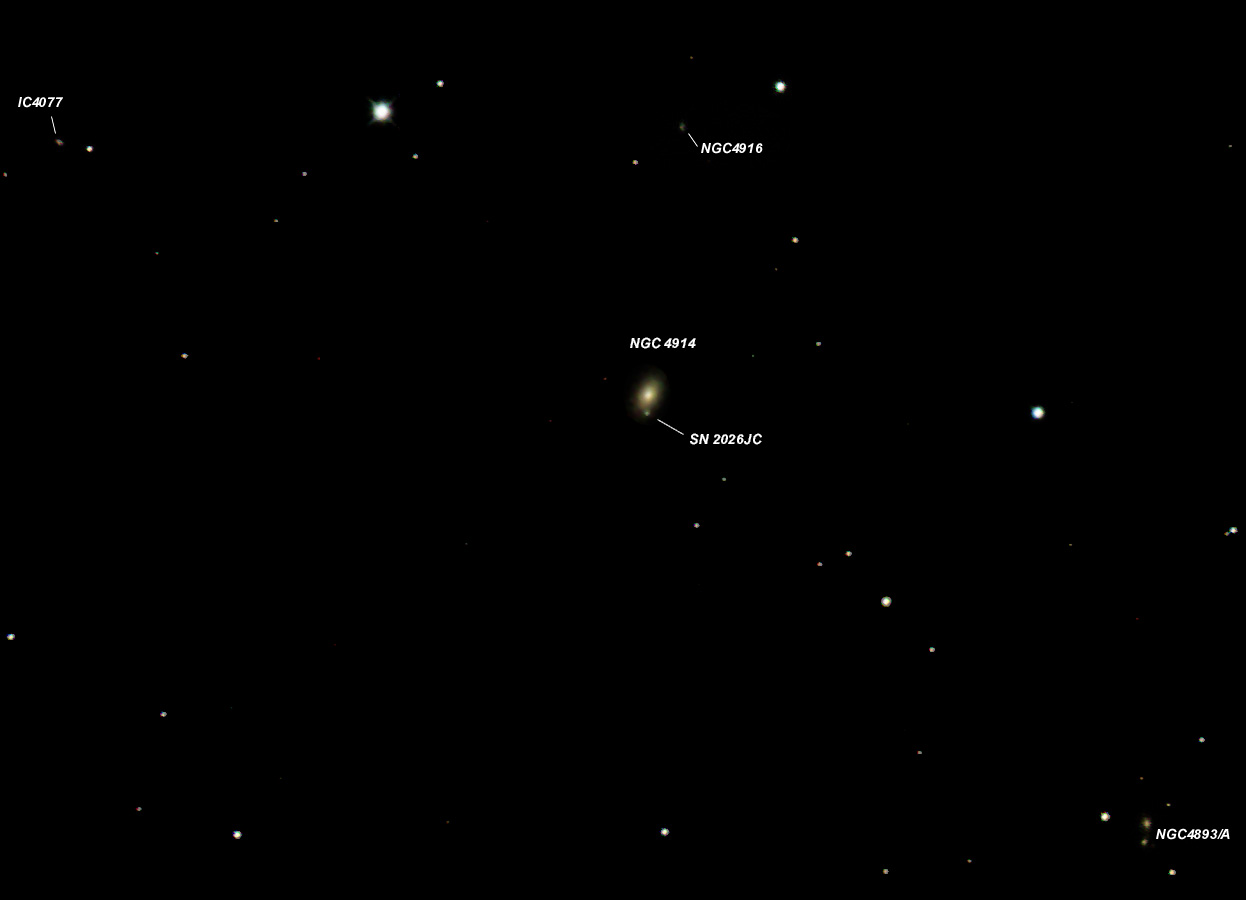 NGC4914 & SN2026JC  NGC4914 & SN2026JC |
 To view DSOs in the eastern sky, you can see them more easily on the Spring Sky page  To view DSOs in the western sky, you can see them more easily on the Autumn Sky page |
Return to my Astrophotography home page