The Spring Sky
The spring sky offers an intermediate view of Deep Sky Objects between the winter and summer seasons. Part of the plane of the Milky Way is still in view, but this is the season for seeing and photographing galaxies and star clusters, as we have good views away from the plane of our Milky Way Galaxy. |
 The spring sky looking south at midnight (image courtesy Stellarium) |
The Virgo Cluster of Galaxies
The Virgo Cluster is a large cluster of galaxies containing around 1,300 galaxies, and forms the heart of the larger Virgo Supercluster. One of the most interesting features of this cluster is known as Markarian's Chain. |
 Virgo Cluster of Galaxies (background image courtesy Stellarium) |
Click on thumbnails for larger images.
 Virgo Cluster |


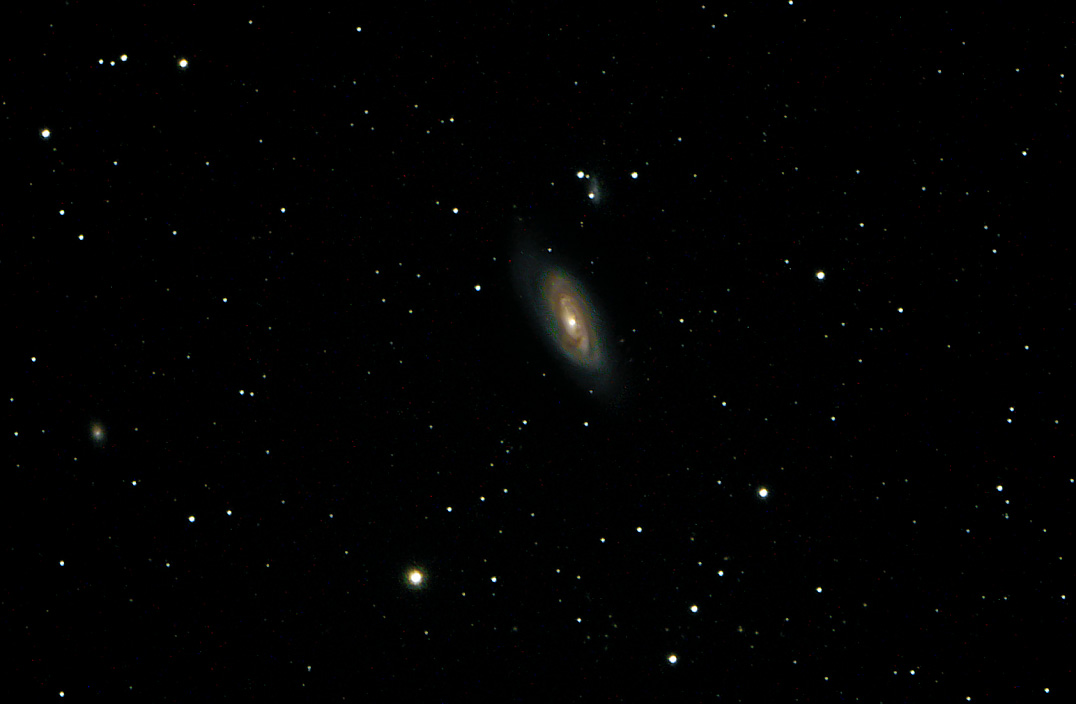


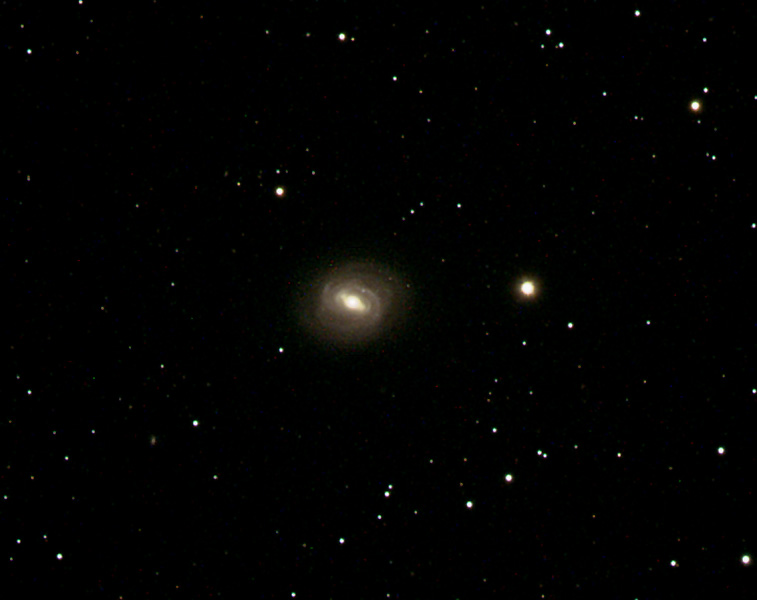

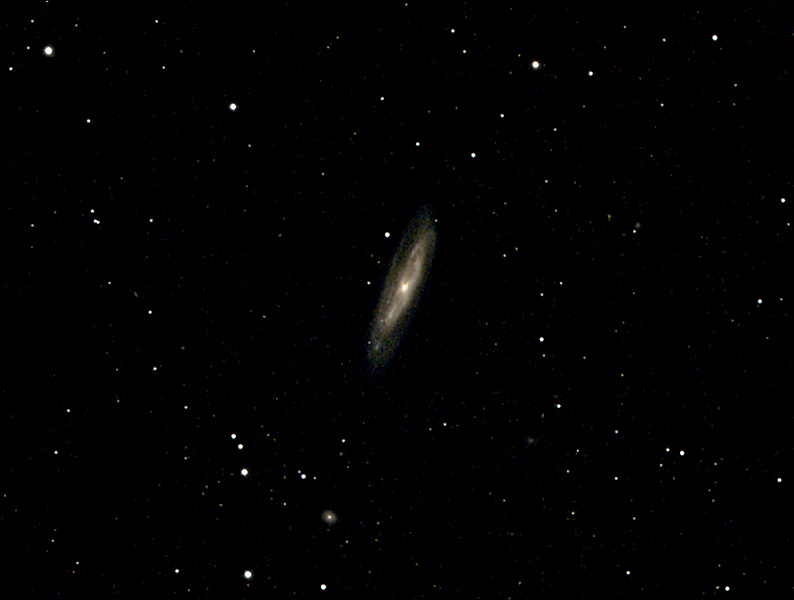

 M87 Galaxy annotated |
Galaxy Clusters in Leo
One of the interesting small clusters is known as the Leo Trio. Numerous smaller galaxies are located here as well. |
 Leo Galaxy Clusters (background image courtesy Stellarium) |
Click on thumbnails for larger images.
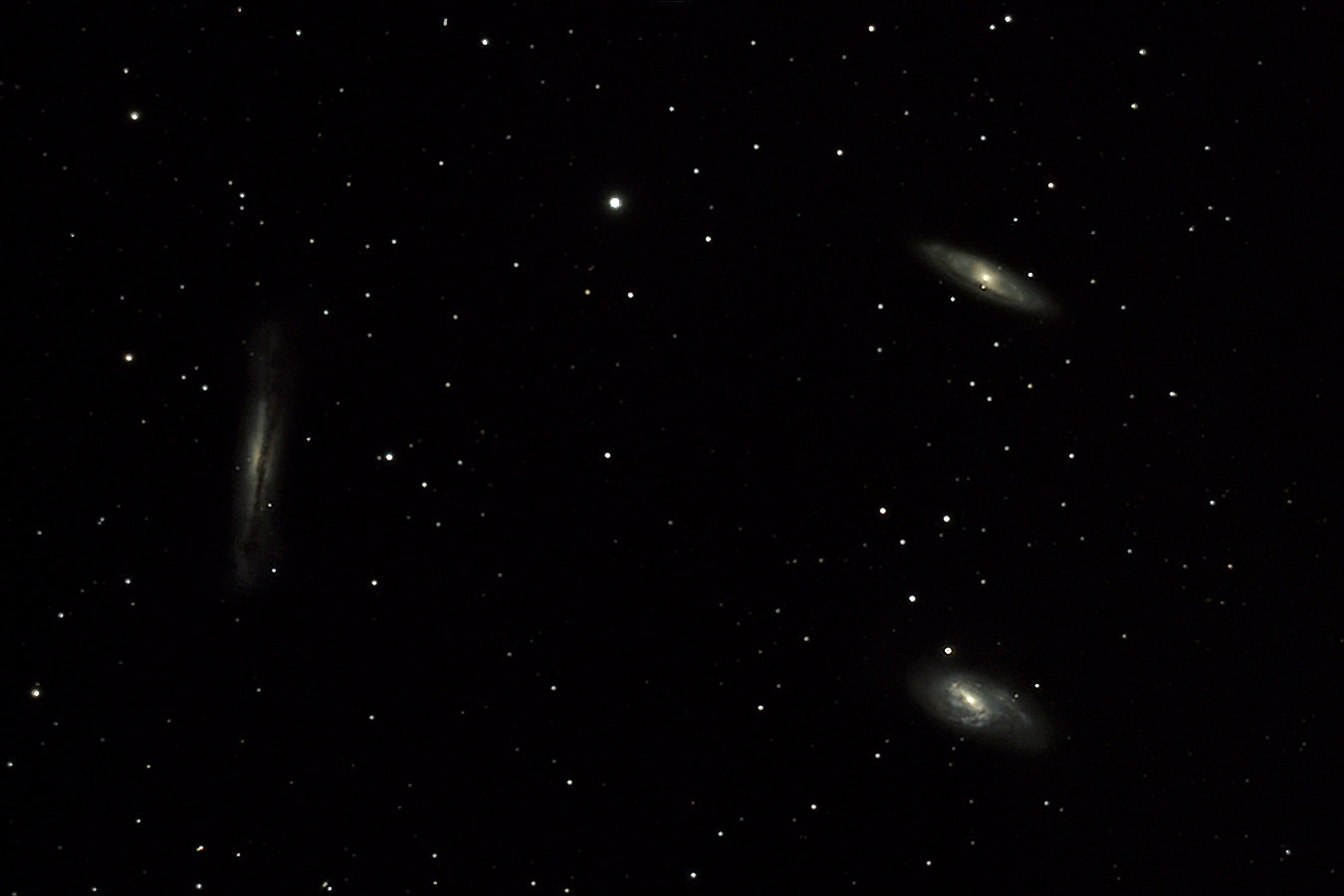 Leo Trio M65 & M66 & NGC3628  Leo Trio annotated 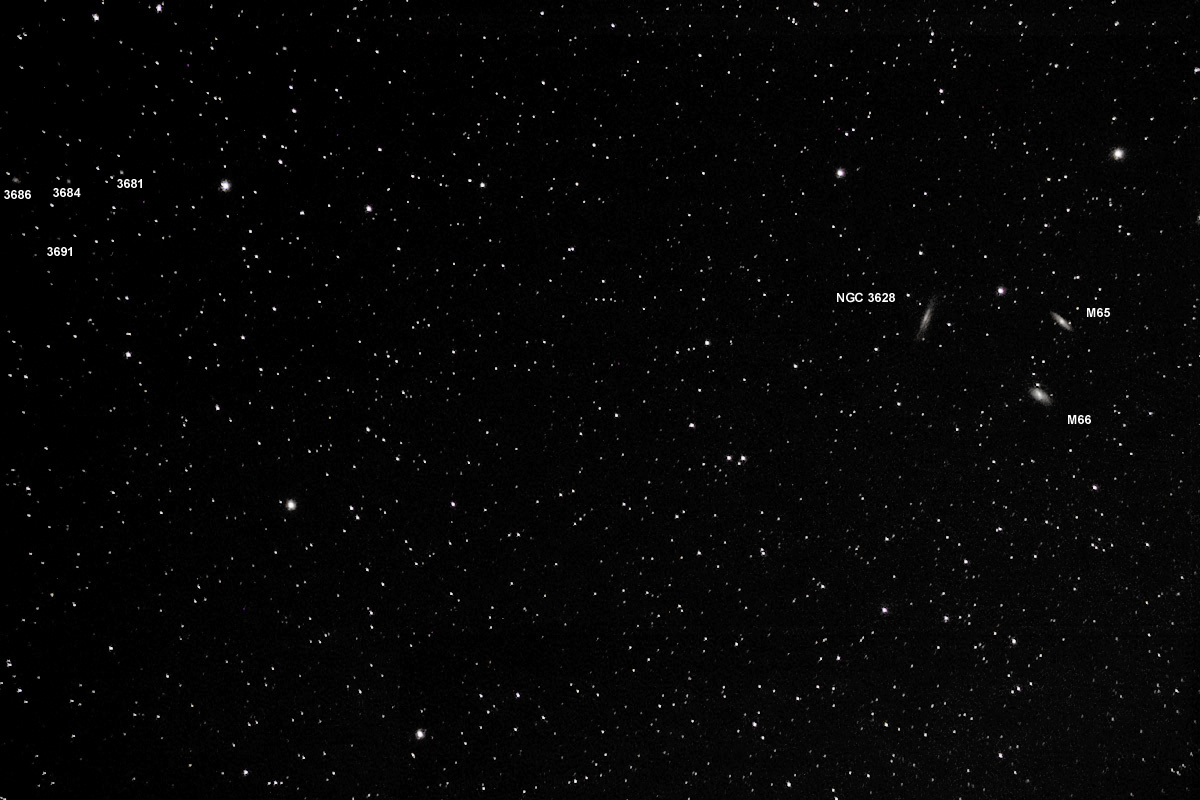 Leo Trio & Leo Quartet annotated | ||
 M95 & M96 Galaxies  M95 & Asteroid Kievtech  M96 Galaxy |
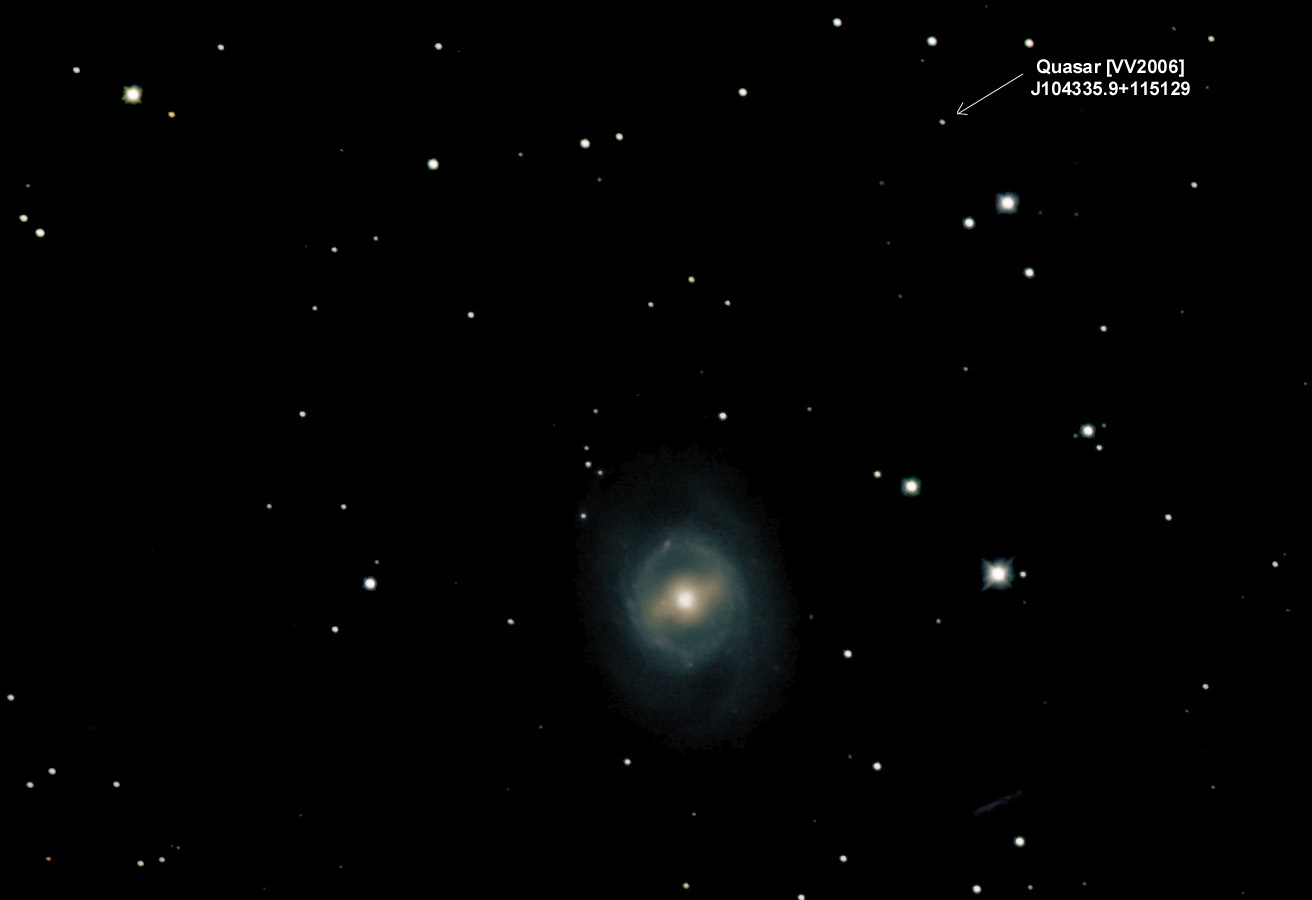 M95 Annotated  M96 Annotated  M95 & M96 & M105 Galaxies  M95 & M96 & M105 annotated |
More Deep Sky Objects
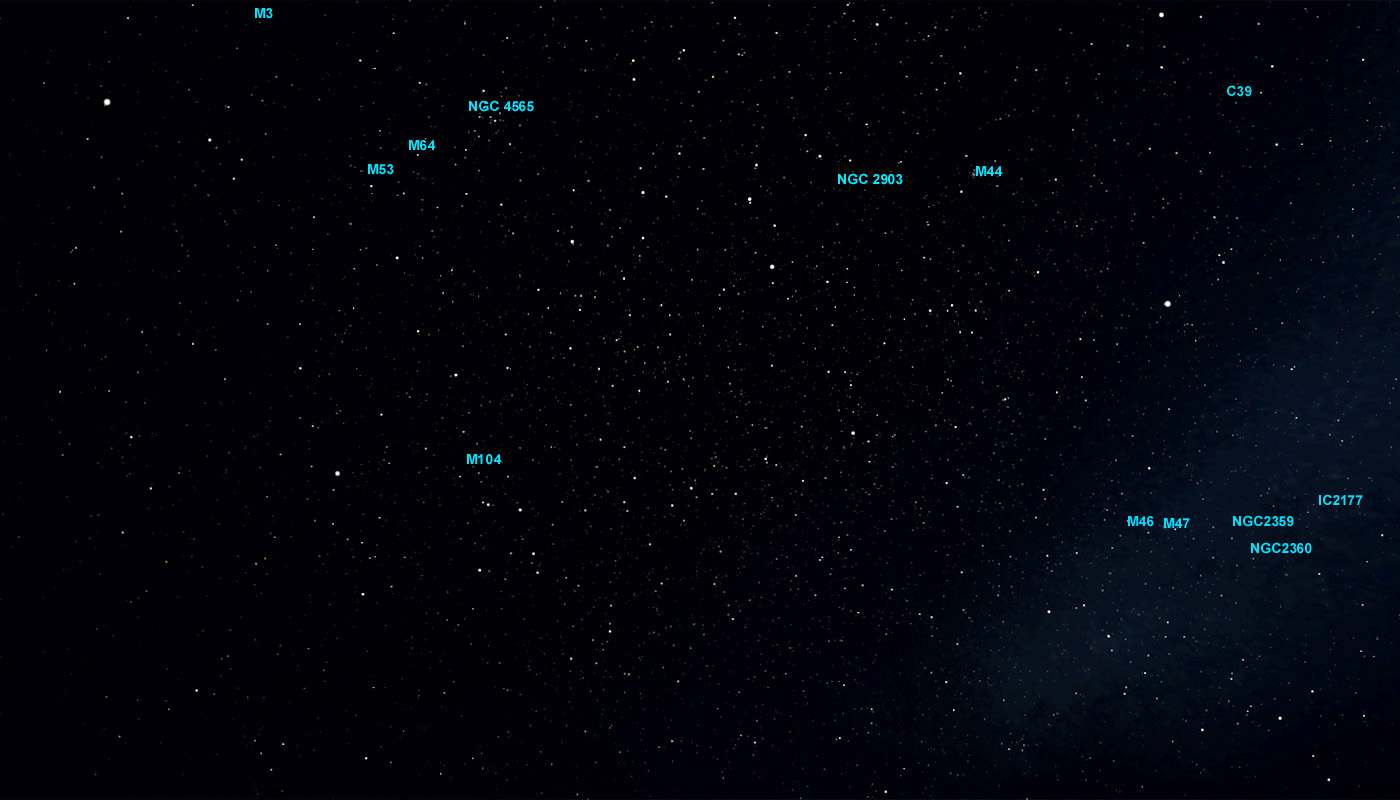 More Deep Sky Objects (background image courtesy Stellarium) |
Click on thumbnails for larger images.
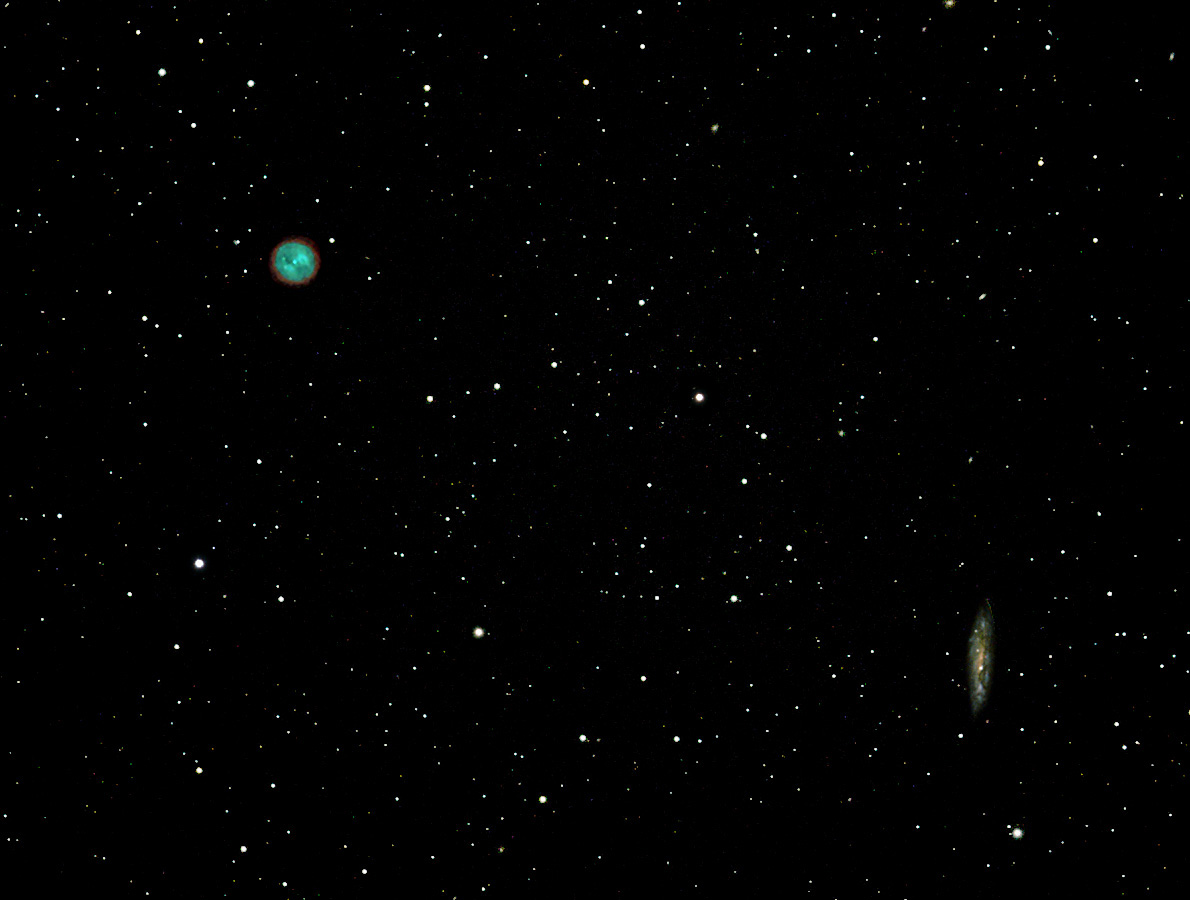
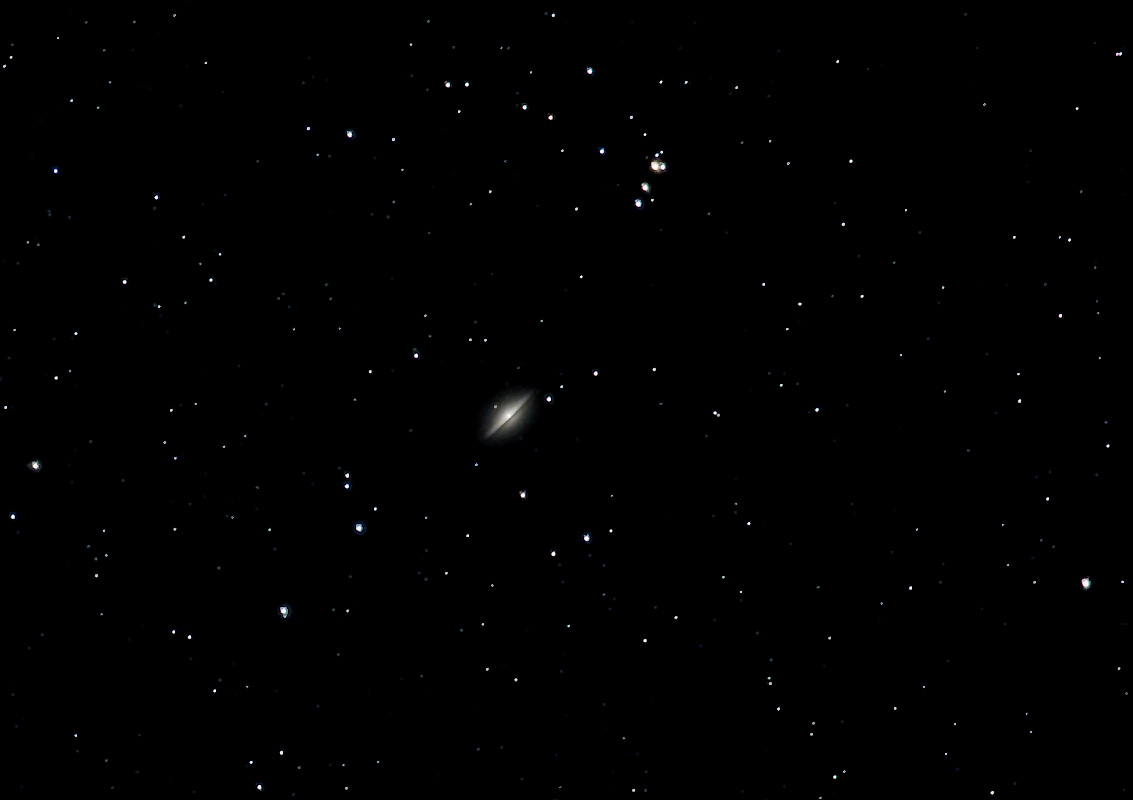 Sombrero Galaxy (M104)  Black Eye Galaxy (M64) 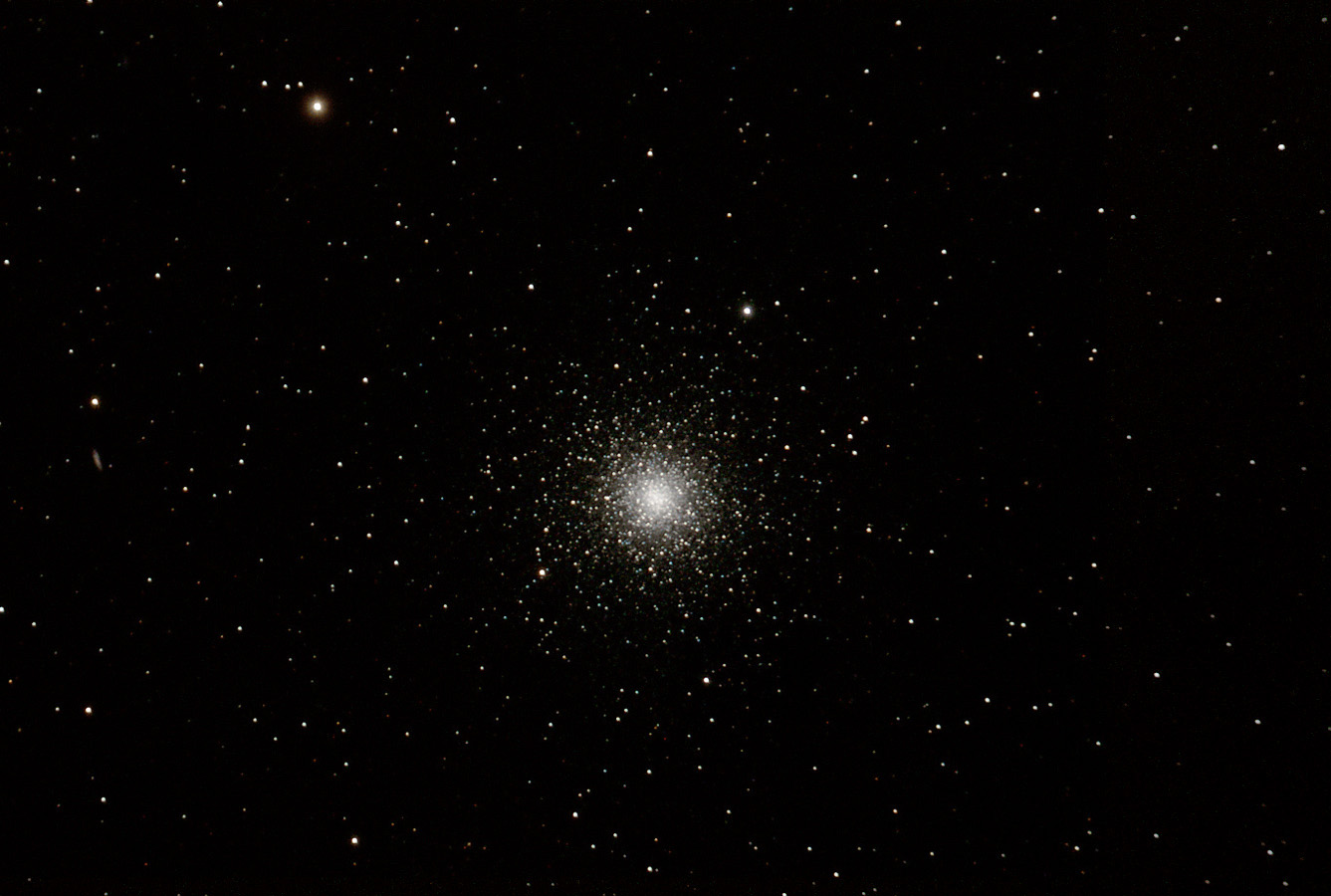 M3 Globular Cluster 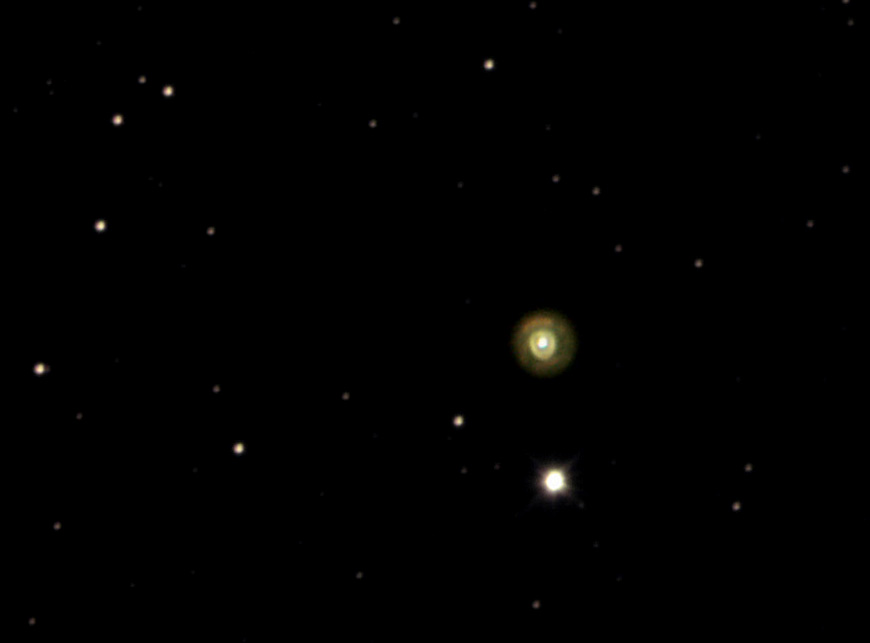 Eskimo Planetary Nebula (C39) | |||
 Seagull (IC 2177) Nebula 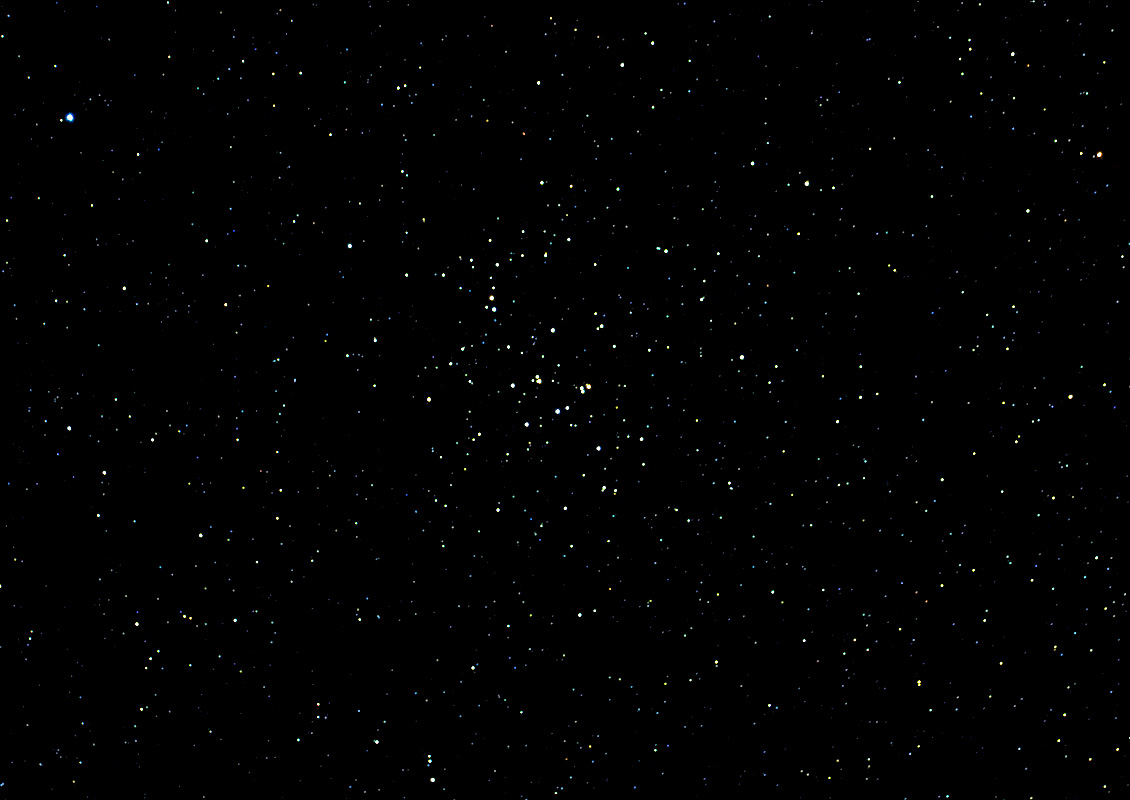 Beehive (M44) Open Cluster 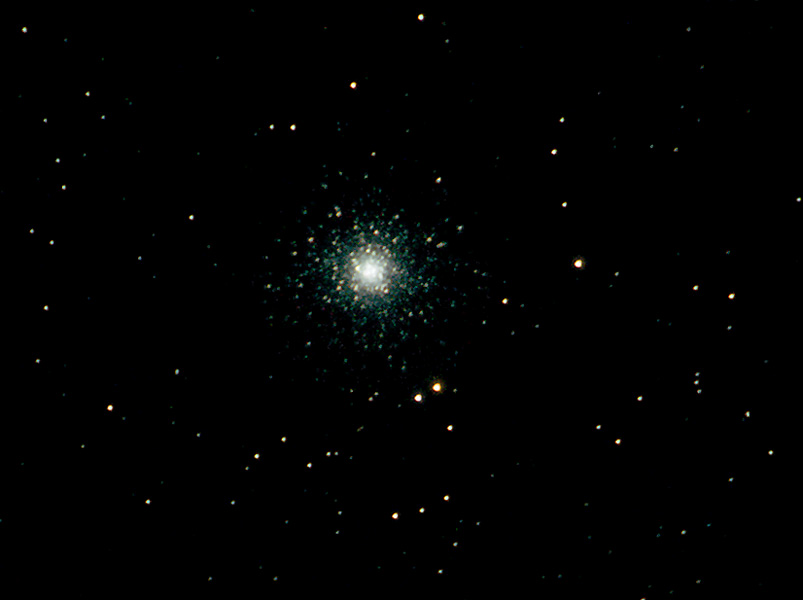 M53 Globular Cluster  M53 & NGC 5053 Globular Clusters |
 Thor's Helmet (NGC 2359)  Thor's Helmet (NGC 2359) & NGC2360 Open Cluster  NGC2903 Galaxy | ||
 M46, M47 & NGC 2423 Open Clusters  M46 Open Cluster & NGC2438 Planetary Nebula  Galaxy NGC4565 |
The View to the North
The view to the north also shows the plane of our Milky Way Galaxy, and DSOs near the celestial pole (Polaris) come into view. At my latitude for astrophotography, Polaris is located 38 degrees above the horizon. All of the DSOs within a circle of 38 degrees from Polaris will be visible all year long, but many of them will be too close to the horizon to be easily seen through the dense atmosphere. 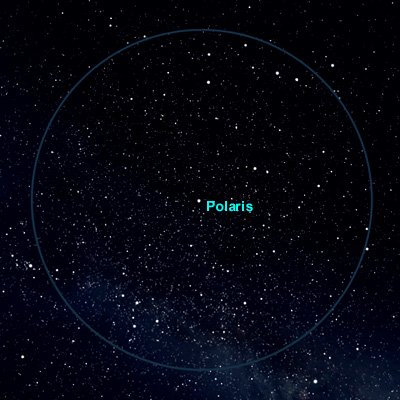 38 degree circle around Polaris (background image courtesy Stellarium) |
 The spring sky looking north at midnight (image courtesy Stellarium) |
The Milky Way Region
Although there are numerous nebulae in the Milky Way that can been seen, many of them are so close to the horizon that viewing can be difficult. |
 The Milky Way Region (background image courtesy Stellarium) |
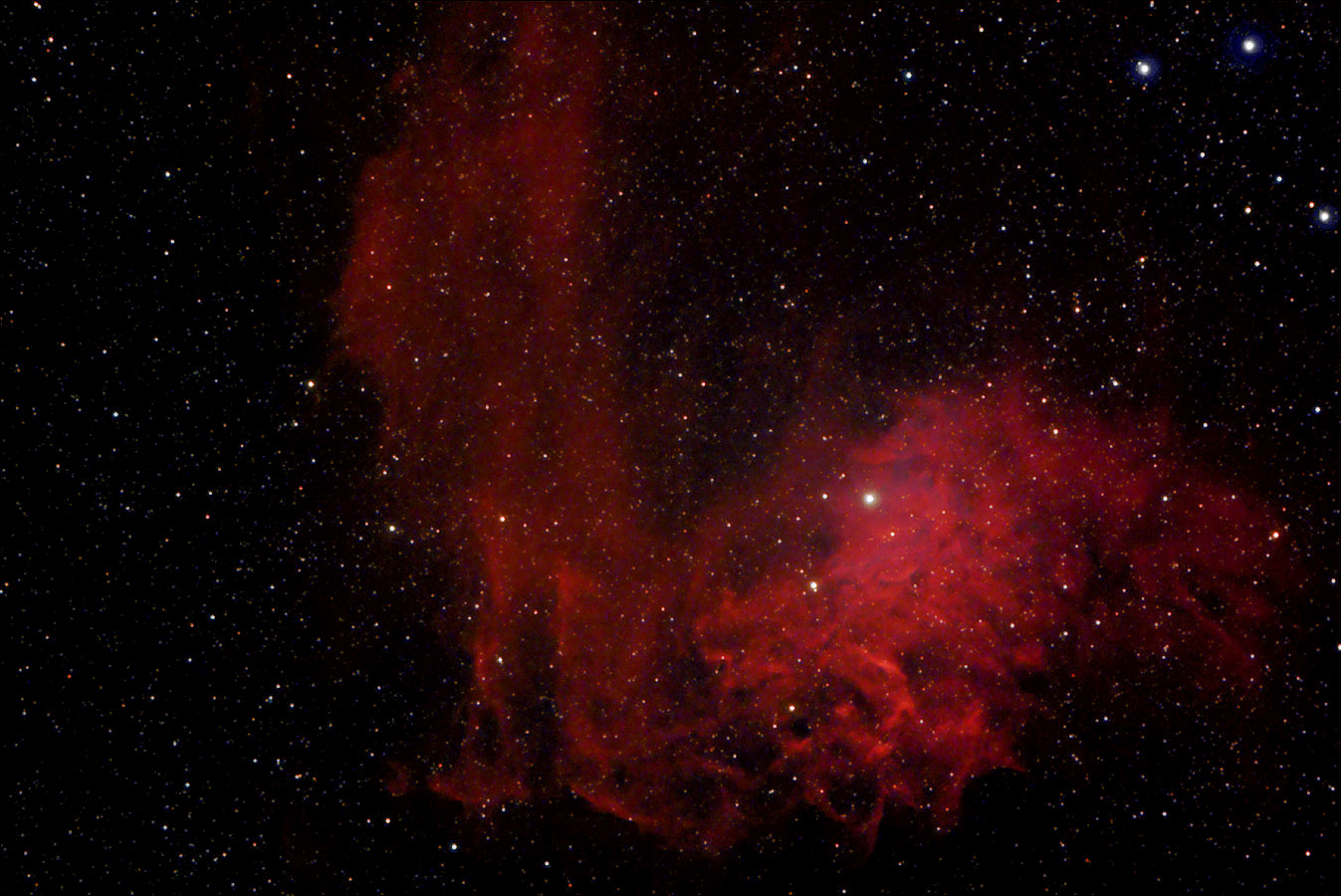


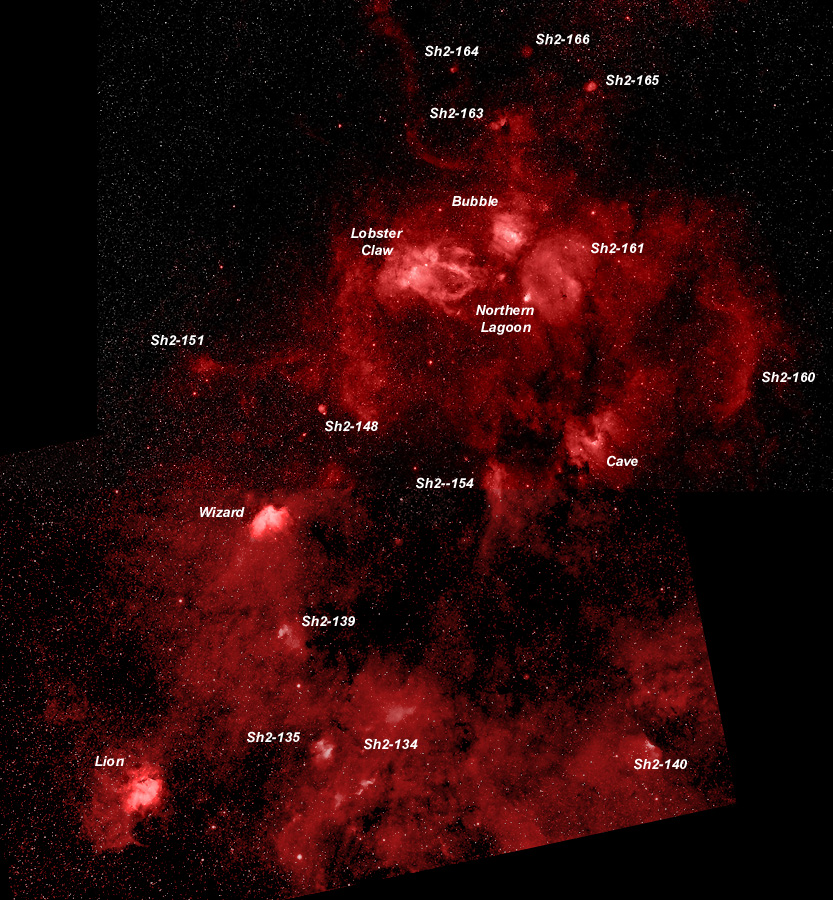
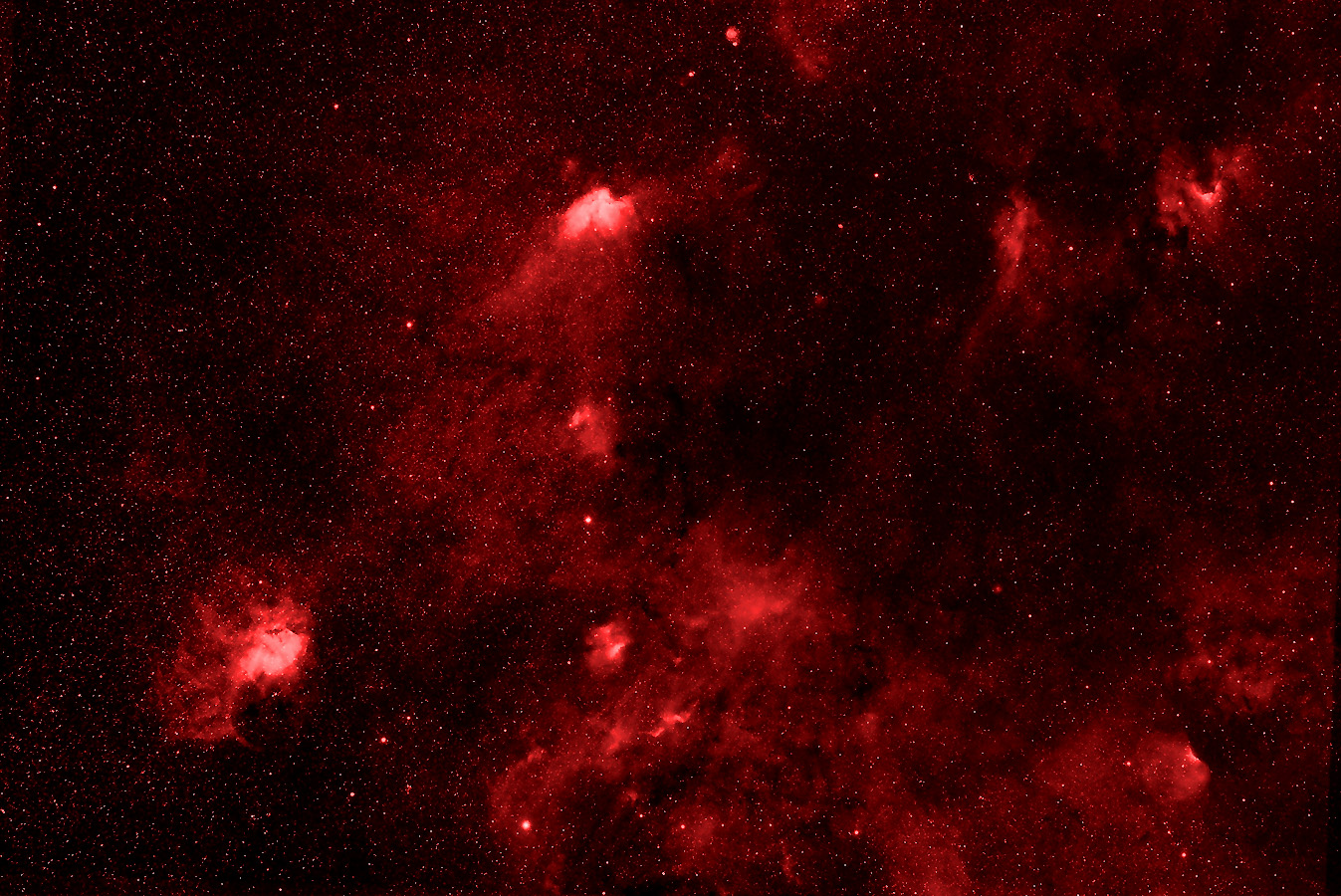


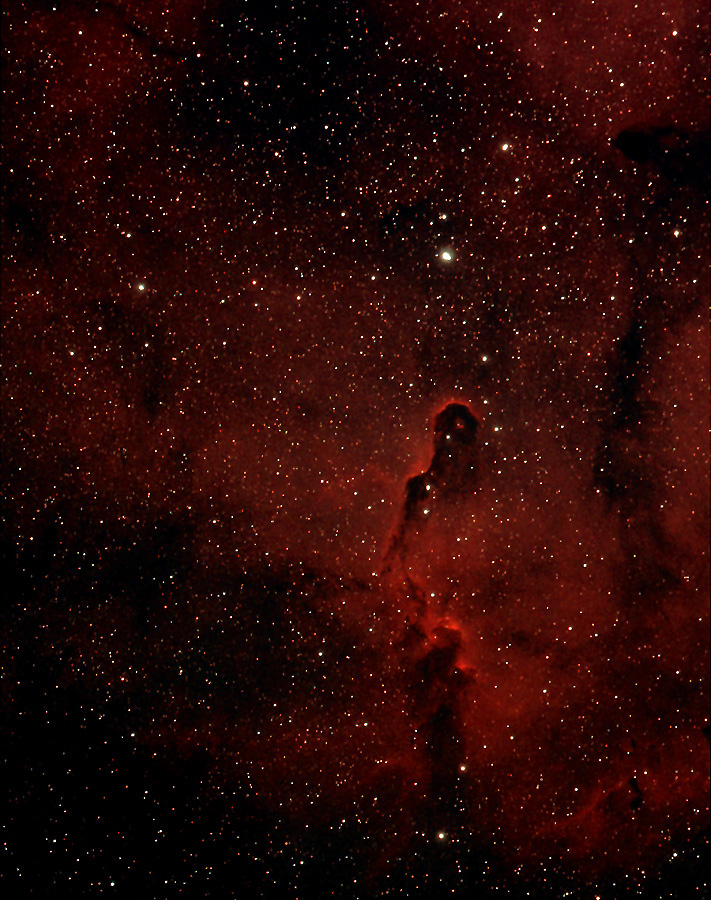


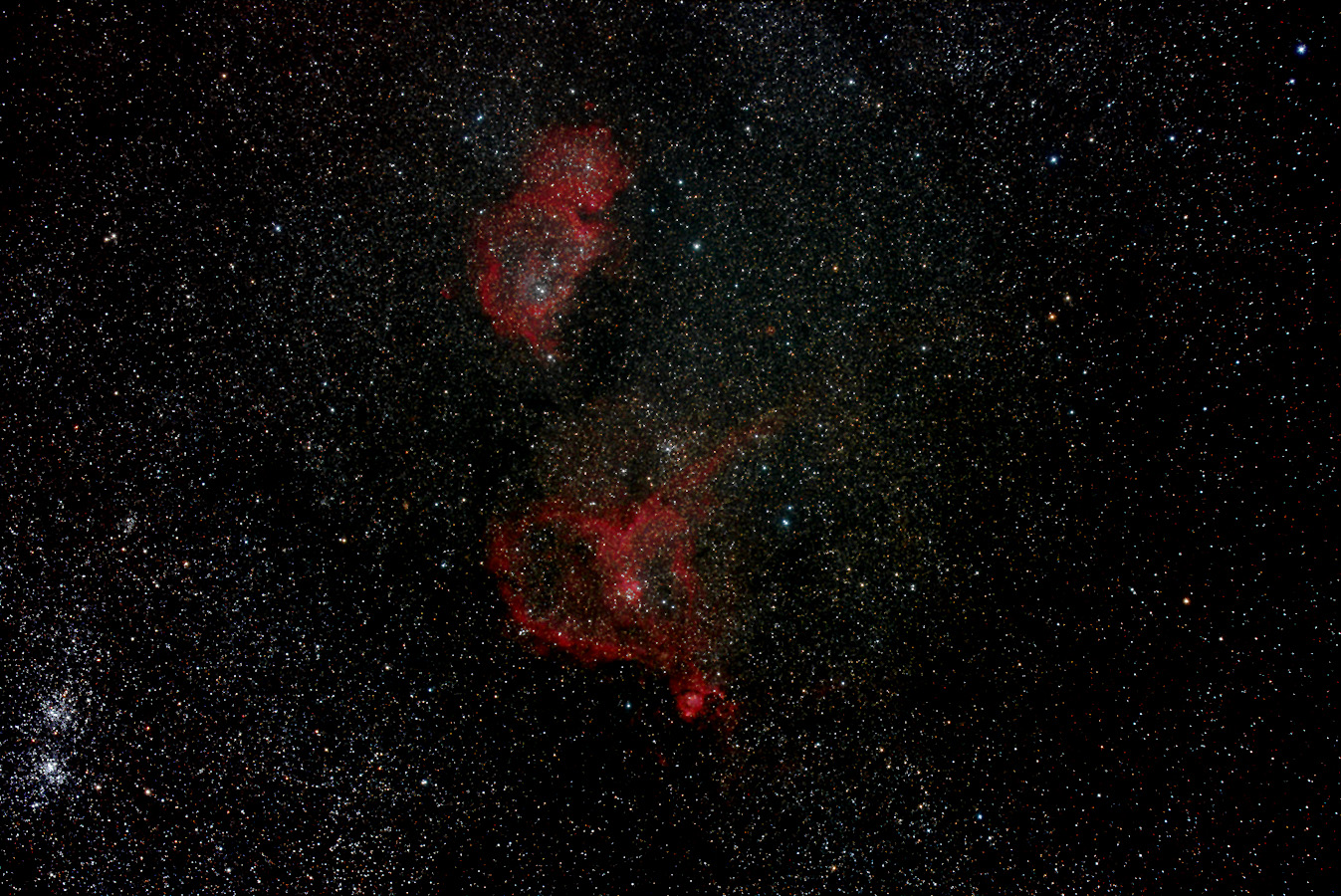
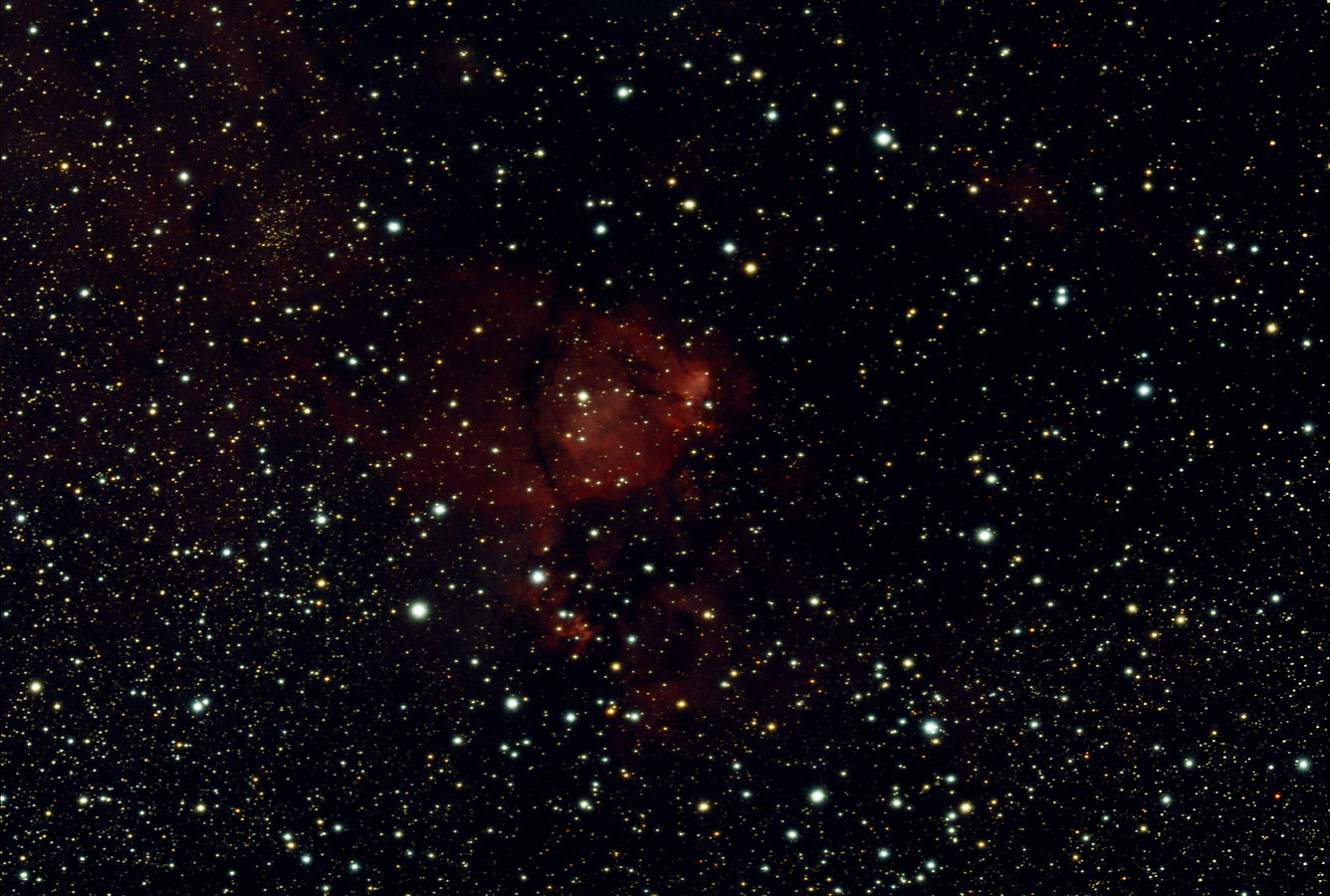 Fish Head Nebula (NGC 896)  Fossil Footprint Nebula (NGC 1491)  Cave Nebula (C 9) | ||
 Oyster Nebula (NGC 1501) 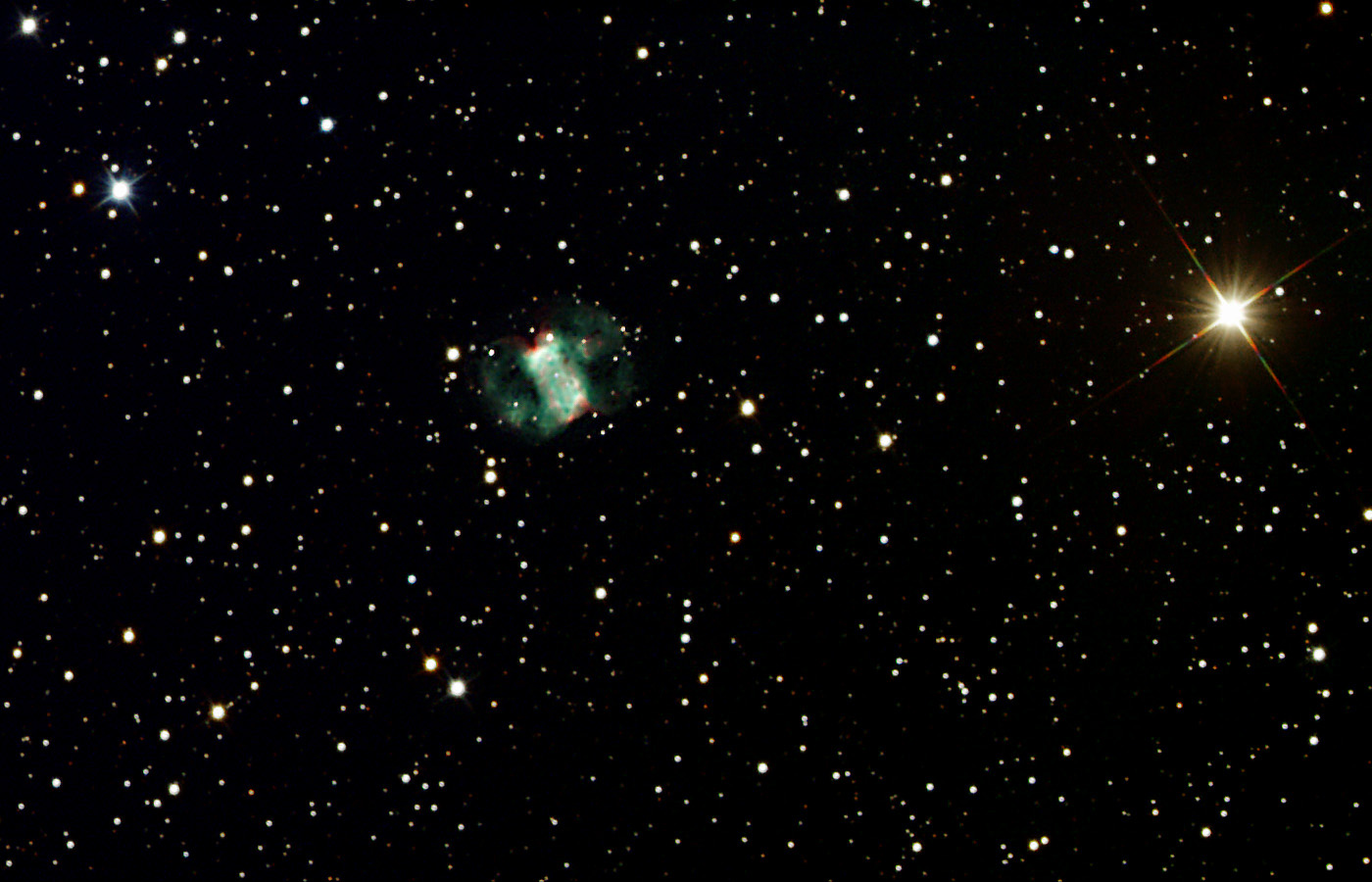 Little Dumbbell Nebula (M 76) 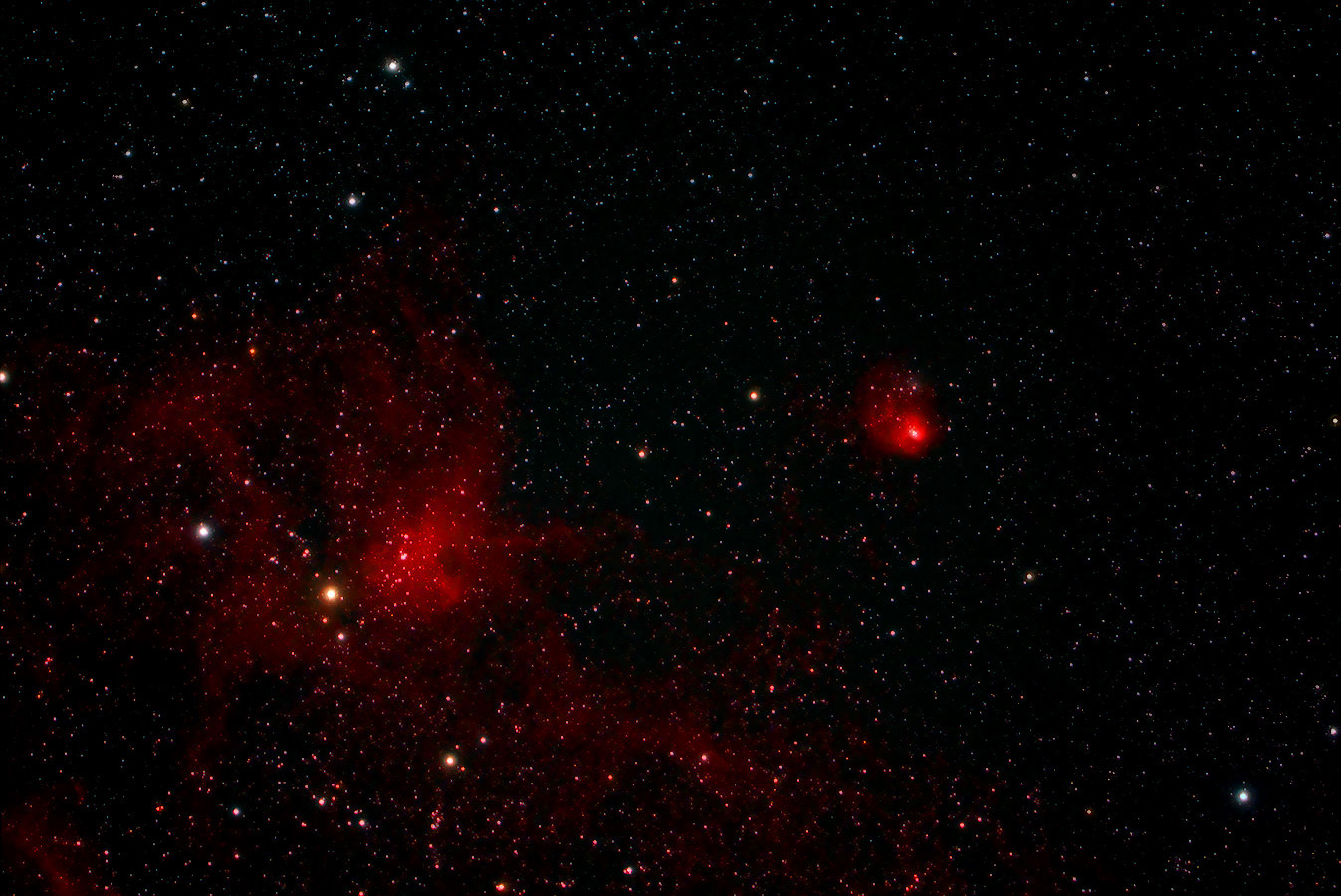 Spider & Fly Nebulae (IC417 & NGC1931) Nebulae |
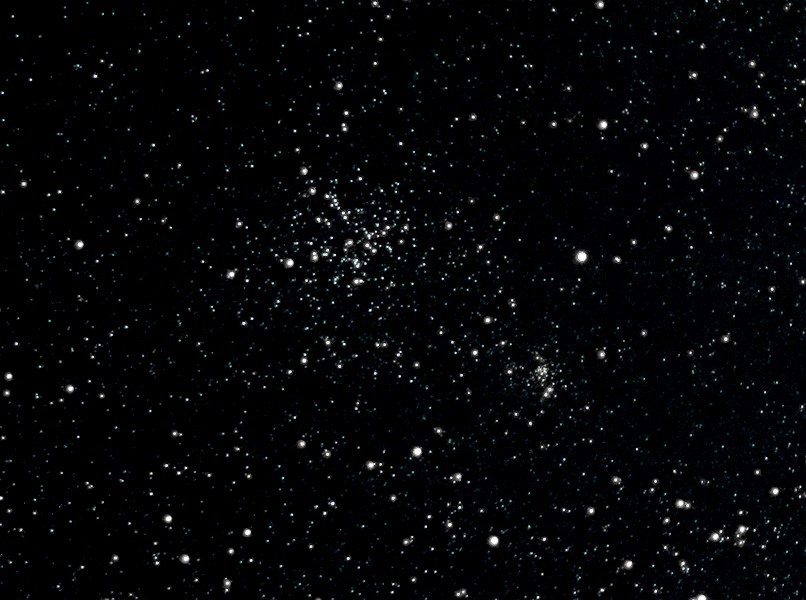 Starfish (M38) Open Cluster 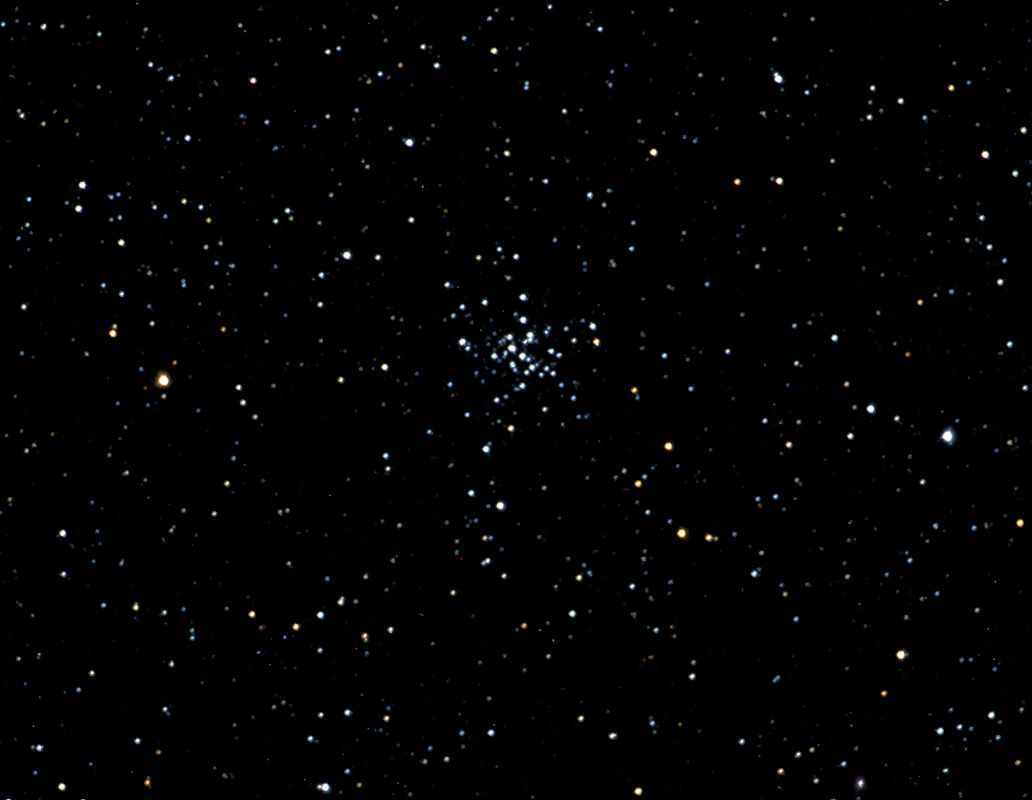 Pinwheel (M36) Open Cluster 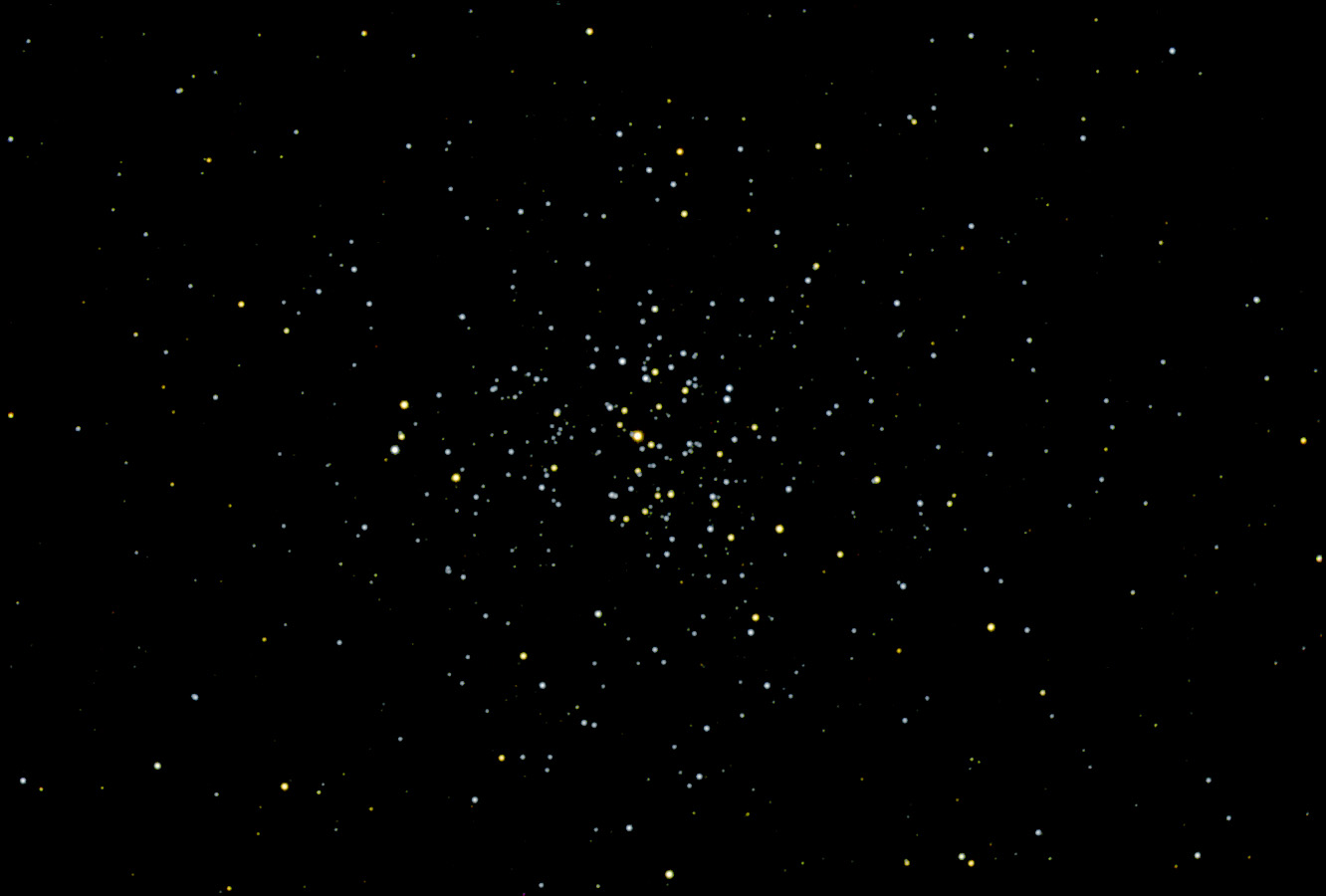 Salt & Pepper (M37) Open Cluster  Blinking Eye Planetary Nebula (NGC 6826) |
Galaxies and Clusters
The beautiful galaxies that are near the north celestial pole are now high in the sky and are in excellent position for viewing and astrophotography. |
 Galaxies and Clusters (background image courtesy Stellarium) |




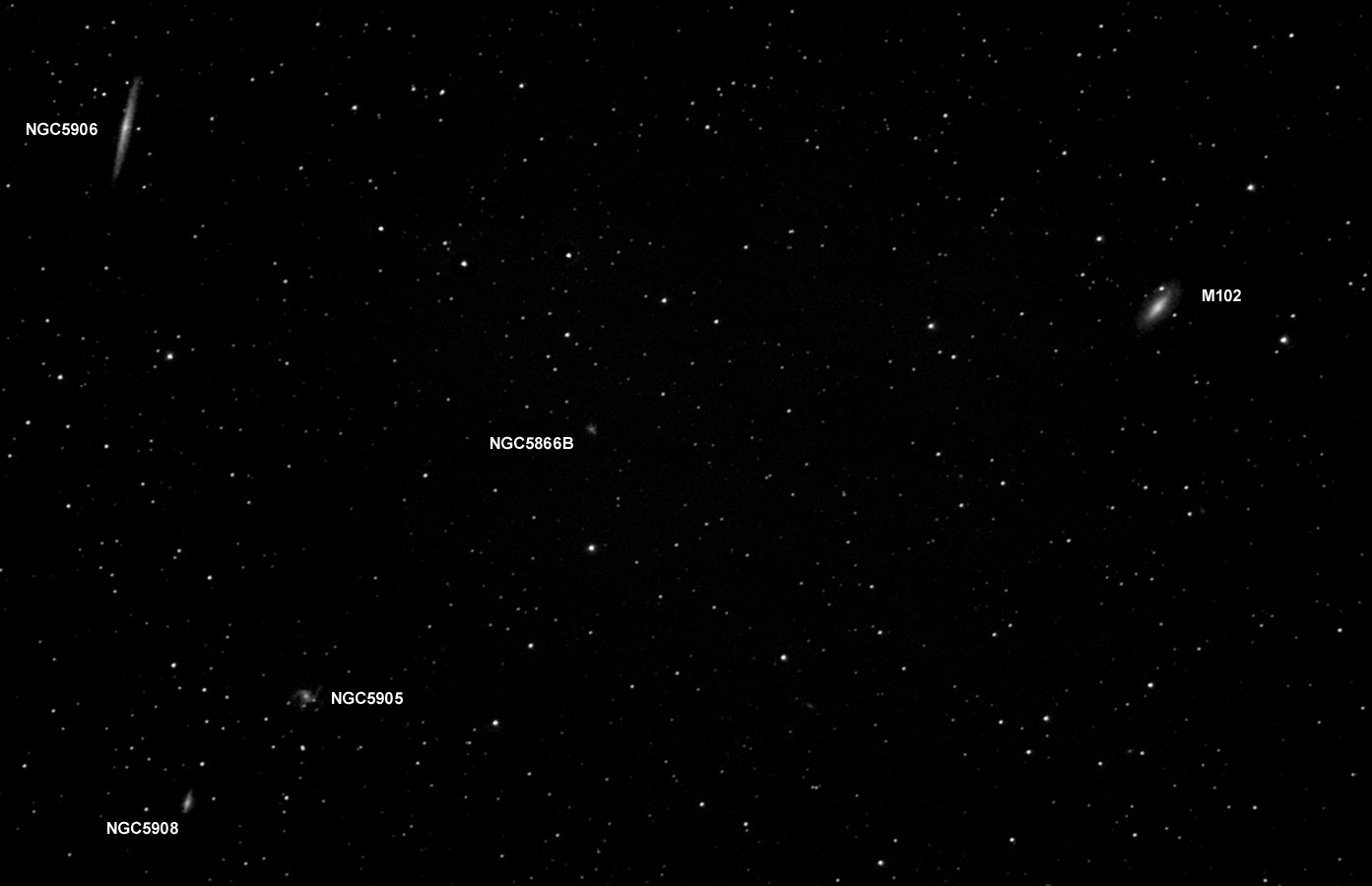


 Helix Galaxy (NGC2685)  Galaxy NGC4618 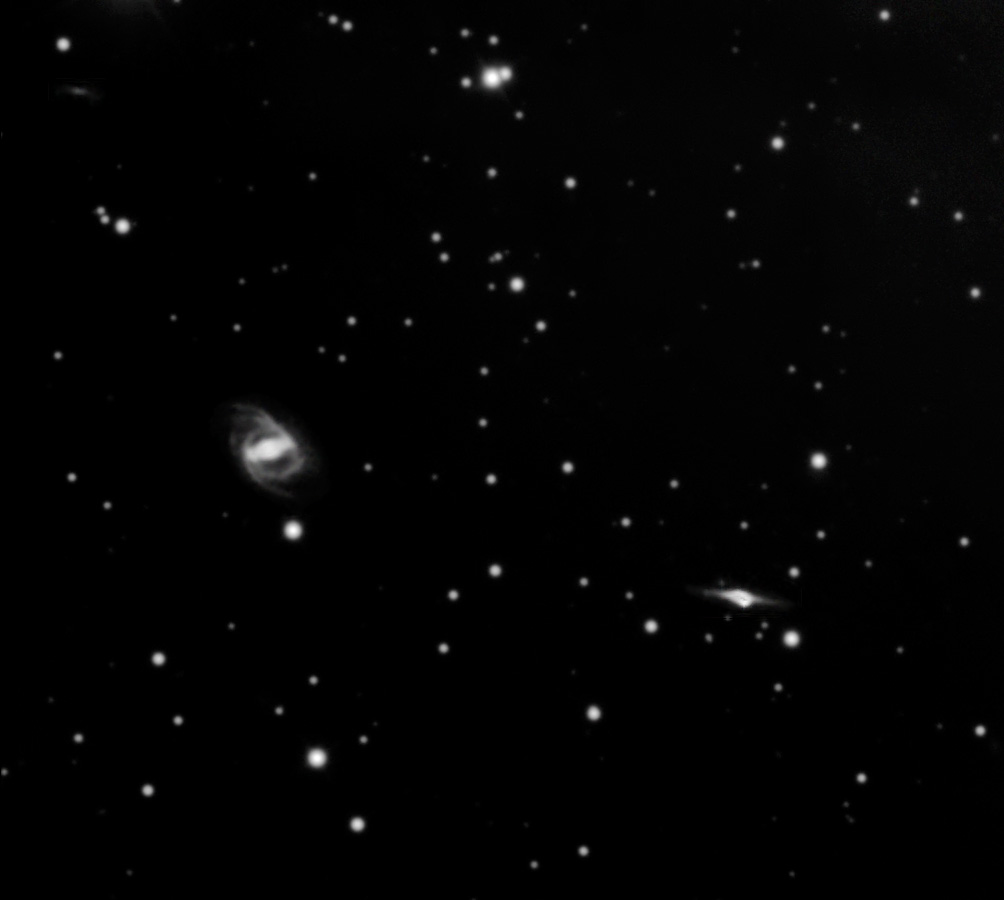 Galaxy NGC2523 |
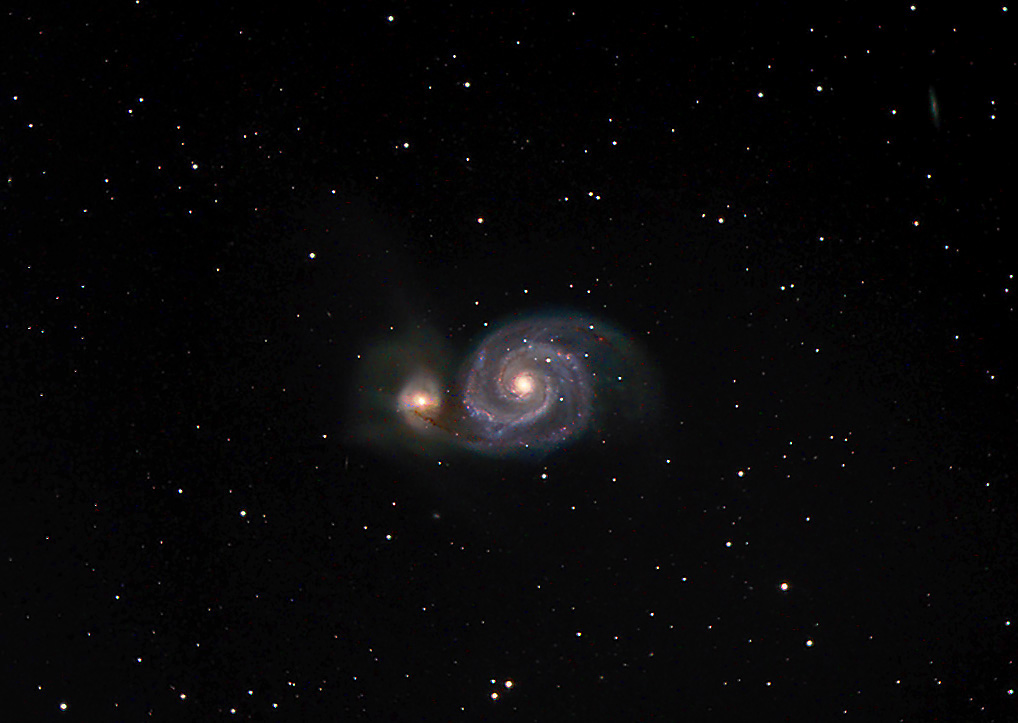
Pinwheel Galaxy (M101) and Supernova SN 2023ixf
 Pinwheel Galaxy (M101)  Pinwheel (M101) Galaxies annotated | |
Supernovae are powerful explosions of stars when their internal nuclear fuel supplies burn out and the stars quickly collapse, resulting in massive shock waves causing stars to explode. Supernova 2023ixf was first observed on 19 May 2023 in the Pinwheel Galaxy (M101), and by 22 May 2023, SN 2023ixf had brightened to about magnitude 11.The supernova started to fade around 10 June 2023. SN 2023ixf is not visible in the 6 April 2024 image. | |
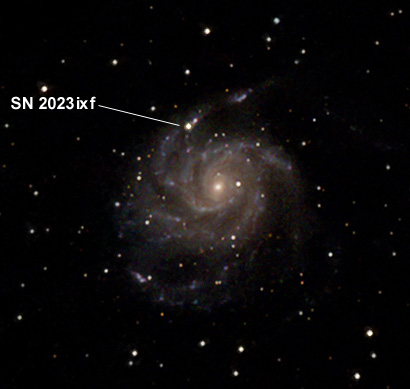 Supernova SN 2023ixf; 3 July 2023 Pinwheel Galaxy (M101) ; 20 May 2025  Supernova SN 2023ixf Pinwheel Galaxy (M101) 19 April 2022-3 July 2023-6 April 2024 |
NGC 4914 Galaxy and Supernova SN 2026JC
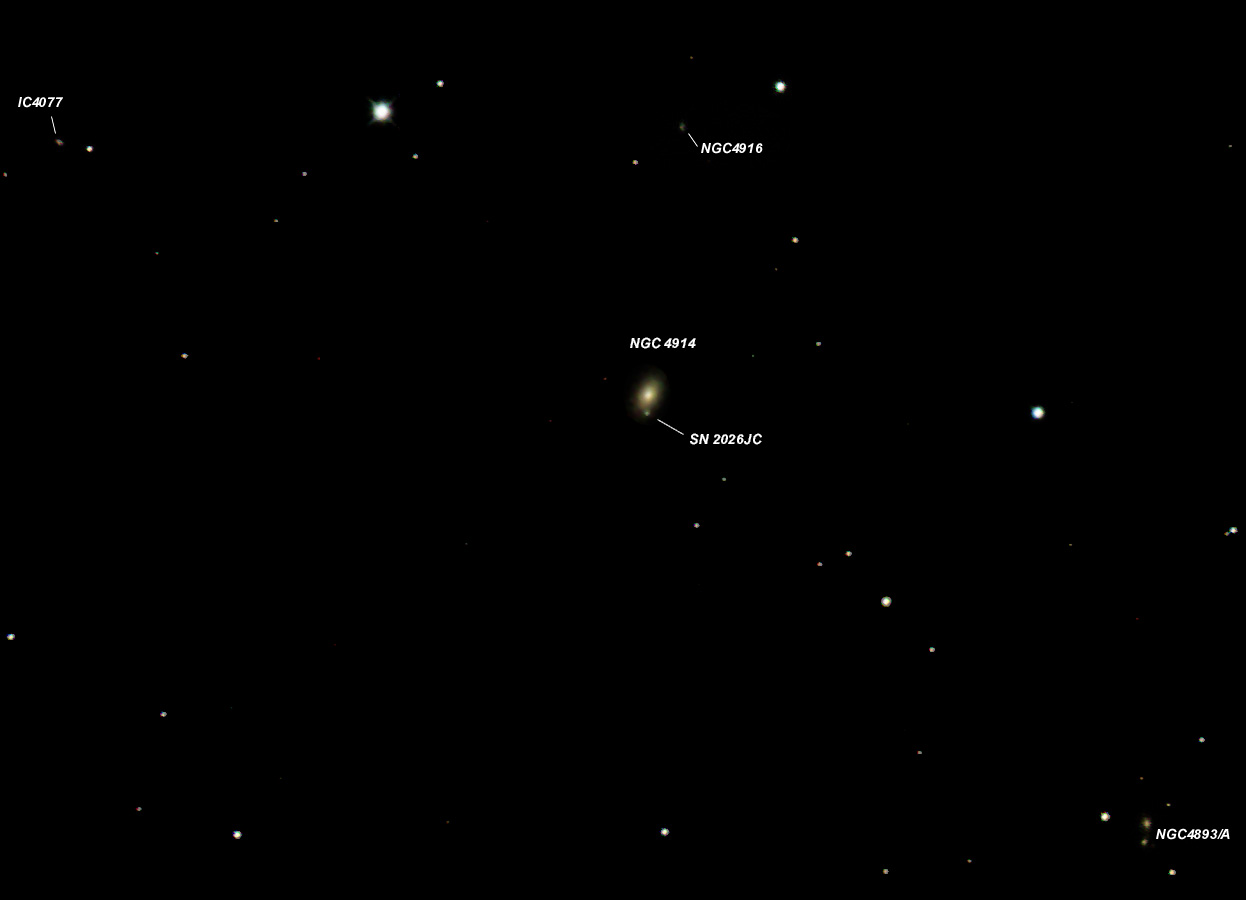 NGC4914 & SN2026JC  NGC4914 & SN2026JC |
 To view DSOs in the eastern sky, you can see them more easily on the Summer Sky page  To view DSOs in the western sky, you can see them more easily on the Winter Sky page |
Return to my Astrophotography home page